Which language would you like to use?



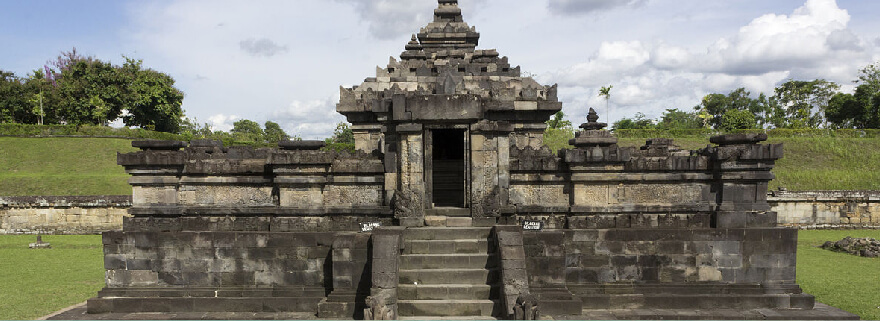
A temple buried for centuries under volcanic ash, Sambisari is a story of loss, rediscovery, and resilience right beneath Yogyakarta’s soil.
Hidden just beneath Yogyakarta’s fertile soil lies a temple with a story unlike any other. Sambisari Temple, once buried for centuries under layers of Mount Merapi’s volcanic ash, is today one of the city’s most intriguing archaeological treasures.
Its rediscovery wasn’t the result of grand expeditions, but a farmer’s ordinary day in the fields, turning this site into a tale of chance, resilience, and timeless devotion. What’s Inside This Guide:
Don’t let weak signals interrupt your adventure! Before you dive into Sambisari Temple, make sure MyTelkomsel Basic is on your phone. It helps you check and buy data packages anytime, and share your hidden gem discoveries instantly.
Let’s get started! You’ll be amazed at how a temple could be buried and then rise again, just like something out of an action movie.
Also Read: Borobudur Land: Daya Tarik, Lokasi, Harga Tiket, & Jam Buka
The story of Sambisari Temple begins not in ancient texts but with a farmer’s hoe. In 1966, a local farmer in Sambisari village stumbled upon a carved stone while plowing his field.
This accidental find caught the attention of archaeologists, leading to years of excavation.
Built in the 9th century during the Ancient Mataram Kingdom, the temple was buried under 6.5 meters of volcanic material after a massive eruption of Mount Merapi in the 10th century.
Excavation and reconstruction took more than 21 years, and finally, in 1987, Sambisari Temple was opened to the public.
Historians believe Sambisari was built by King Rakai Garung of the Ancient Mataram Kingdom. Dedicated to Hindu worship, the main temple faces west and was used to honor Lingga-Yoni, symbols of fertility and Shiva’s divine power.
In front of the main shrine stand three smaller temples, most likely dedicated to the Hindu trinity of Brahma, Vishnu, and Shiva. This structure reflects Sambisari’s role as both a religious hub and a symbol of the kingdom’s devotion.
Every temple in Yogyakarta has its own story, but Sambisari stands out with mysteries that set it apart. Here are five unique facts that make Sambisari Temple unlike any other.
Unlike most temples in Yogyakarta, Sambisari lies 6.5 meters below ground level. Walking down the steps into the temple feels like entering another world: quiet, secluded, and almost mystical.
Also Read: 5 Destinasi Wisata Magelang yang Bikin Liburan Makin Berkesan
Unlike planned archaeological digs, Sambisari was discovered by chance. This dramatic story makes it one of the most fascinating temple finds in Indonesia.
One of the temple’s most famous features is the statue of Durga Mahisasuramardini, a symbol of good triumphing over evil. The statue reflects the rich cultural and religious artistry of the era.
Despite being buried for centuries, Sambisari is no small shrine. It consists of one large main temple and three perwara (companion temples), showing its importance as a major religious site.
The temple’s burial under volcanic debris is living evidence of Mount Merapi’s devastating eruptions. For archaeologists, Sambisari is a key site to study the relationship between nature and ancient civilizations.
These five facts prove that Sambisari Temple is more than just an ancient ruin. It’s a living reminder of history, myth, and the sheer force of nature.
Local tales add an air of mystery to Sambisari. Some say the Durga statue carries supernatural energy, while others link it to ancient legends of protection and power.
In Hindu belief, Durga Mahisasuramardini represents divine strength and the victory of good over evil. Whether myth or fact, the presence of this statue makes Sambisari Temple even more intriguing for visitors.
Also Read: Candi Ratu Boko: Mitos Keramat di Balik Sunset Paling Epic
From its dramatic discovery to its underground setting, Sambisari Temple proves that history sometimes hides in plain sight, waiting to be uncovered. It’s a place where myth, culture, and nature meet: perfect for curious travelers.
Before you snap and share your Sambisari moments, make sure MyTelkomsel Basic is ready to keep your adventure smooth and connected.
A walk through Sambisari Temple isn’t just about seeing ancient stones. It’s about experiencing history that nearly disappeared, only to rise again.
Short Video baru dan seru
Ratu Boko Temple, Yogyakarta: Sacred Legends Behind the Most Epic Sunset
29
Sindu Kusuma Edupark: A Guide to Rides & Fun in Yogyakarta!
13
Lake Maninjau: Legends, Unique Facts, and Travel Tips!
44
Goa Pindul: Myths of Crocodiles Debunked, Here Are the Unique Facts!
25
 Komentar
0
Komentar
0