




Ramadan is a critical period for logistics and expedition businesses. Shipment volumes spike significantly, operational schedules shift, and customer expectations for on-time delivery remain high. These combined pressures make logistics operations more complex and demanding than usual.
In situations like this, a Service Level Agreement (SLA) becomes a deciding factor, whether logistics services remain under control or spiral into operational chaos. But how can companies ensure that every commitment stated in the SLA is fulfilled on the ground, especially during peak seasons like Ramadan?
What Is Service Level Agreement?
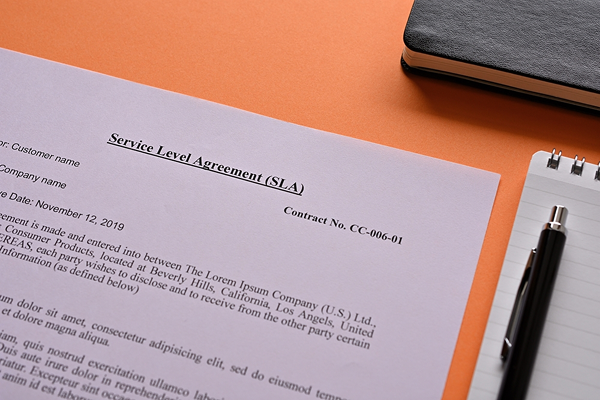
A Service Level Agreement (SLA) is a formal written agreement between a logistics service provider and its customer that clearly defines service standards and performance expectations. More than just a contract, an SLA serves as a shared reference point to ensure both parties are aligned from the start.
An SLA typically covers the aspects customers care about most, such as delivery timeframes, procedures for handling delays, response times for complaints, and accountability if issues occur during shipment. With a clear Service Level Agreement in place, misunderstandings can be minimized, and service quality becomes measurable rather than subjective.
Why Is Service Level Agreement Important for Logistics During Ramadan?
Ramadan introduces a very different operational dynamic for logistics companies. Delivery volumes increase sharply, while working hours, staffing availability, and transportation conditions often change. In this environment, a Service Level Agreement acts as a stabilizing framework that keeps services running smoothly.
First, an SLA helps align expectations between logistics providers and customers. What can realistically be delivered, and what cannot during Ramadan becomes transparent. This includes delivery estimates, cutoff times, and response speeds when problems arise.
Internally, SLAs also help logistics companies manage service performance more effectively. Agreed-upon standards can be used as benchmarks to evaluate delivery accuracy, timeliness, and issue resolution. This level of transparency allows teams to stay focused on realistic targets and continuously improve their operations.
Most importantly, a well-executed Service Level Agreement helps maintain customer trust during high-pressure periods. When services are delivered according to clearly stated commitments, customers feel more secure and are more understanding of operational limitations.
Types of Service Level Agreements
In practice, a Service Level Agreement is not one-size-fits-all. Logistics companies often design SLAs based on service characteristics, customer volume, and operational complexity. However, there are three common types of Service Level Agreements used across the industry.
1. Customer-Based SLA
A customer-based SLA is created specifically for a single client or business partner. The agreement is tailored to the customer’s needs, shipment volume, and business model.
This type of Service Level Agreement is commonly used for strategic or corporate clients with regular shipping requirements. Because standards and commitments are customized, the service feels more personal and closely aligned with the client’s expectations.
2. Service-Based SLA
Unlike customer-based SLAs, a service-based SLA applies to multiple customers using the same type of service. The standards are uniform and consistent, such as for regular delivery or same-day shipping services.
This model helps logistics providers maintain consistent service quality while simplifying operational management. Every customer operates under the same service benchmarks, making performance easier to monitor and control.
3. Multi-Level SLA
A multi-level SLA combines several layers of service standards within a single agreement. This approach is often used by logistics companies offering multiple service tiers, such as regular, priority, and premium deliveries.
Each level has its own service commitments and performance indicators. A multi-level Service Level Agreement provides flexibility while ensuring clarity for each service category.
Example of SLA in Expedition
To better understand how a Service Level Agreement works in practice, logistics of SLAs are usually outlined in clear, measurable points.
For example, a logistics company partnering with an e-commerce business for daily deliveries may agree that shipments to specific areas, such as Greater Jakarta (Jakarta, Bogor, Depok, Tangerang, and Bekasi) must be completed within a maximum of two business days. This gives customers a clear expectation of when their packages should arrive.
Beyond delivery speed, SLAs also regulate delivery accuracy. A logistics provider may commit to near-100% address accuracy to minimize misdeliveries. If issues such as damaged or lost goods occur, the Service Level Agreement often specifies a reporting deadline, such as within 12 hours of receipt.
Additionally, SLAs define accountability when service standards are not met. If negligence from the service provider is proven, compensation may be provided, such as full reimbursement for damaged or lost items.
Challenges of Implementing SLA in Expeditions
On paper, a Service Level Agreement looks structured and measurable. However, when applied to real-world logistics operations, especially during Ramadan, the reality is often far more complex. Below are some of the most common challenges.
1. Unpredictable On-Ground Conditions
Logistics operations depend heavily on transportation reliability, yet real-world conditions are rarely ideal. Traffic congestion, vehicle breakdowns, accidents, and extreme weather can disrupt delivery schedules without warning.
These uncertainties require companies to design SLAs that are realistic and flexible, taking potential disruptions into account rather than relying on overly optimistic targets.
2. Coordination Across Multiple Parties
Logistics services involve many stakeholders, including senders, fleet operators, warehouse teams, logistics partners, and end recipients. Each party operates with different schedules, communication styles, and priorities.
Differences in working hours, communication gaps, or even cultural factors can lead to misunderstandings that affect delivery performance. Without strong coordination, meeting SLA commitments becomes significantly harder.
3. Handling Delays and Lost Shipments
How delays and lost shipments are handled is just as important as preventing them. Without clear procedures, issue resolution can become slow and frustrating for customers, damaging trust in the service provider.
This is why a detailed Service Level Agreement is essential, it acts as a clear guideline for handling problems quickly and consistently when they arise.
FleetSense, a Practical Solution to Support SLA Fulfillment
To overcome these challenges, technology support is becoming increasingly essential. FleetSense from Telkomsel Enterprise helps logistics companies monitor their fleets in real time, providing better visibility into daily operations.
FleetSense simplifies fleet monitoring, improves vehicle security, and supports more efficient route management. With better control and real-time data, logistics companies can ensure deliveries stay on track and meet Service Level Agreement commitments.
To learn more about how FleetSense can support your logistics operations and help you consistently meet your SLA targets, consult with Telkomsel Enterprise today.