





One of the most pressing challenges in today’s digital era is achieving high operational efficiency in business. A private network presents a solution tailored to meet the complex demands of modern enterprises.
In business operations, speed and data security aren’t just nice to have, but they’re essential assets. A private network delivers both by offering an exclusive, high-performance connection tailored to your company’s specific needs.
Industries like manufacturing, mining, logistics, government, public services, energy, oil and gas, and healthcare are among those that benefit most from this solution. These sectors demand reliable, always-on connectivity that public systems, like standard Wi-Fi, often struggle to provide.
By adopting a private network, businesses gain access to faster data speeds, safer corporate communication, and a more stable IT infrastructure, all of which are critical to improving work efficiency.
But what are the real-world advantages of implementing a private network?
One of the biggest benefits is enhanced data security. As cyber threats continue to rise year after year, having a private and isolated network significantly reduces vulnerability, protecting not only sensitive company data but also customer trust.
On top of that, recent research reveals that companies using private networks report less operational downtime and better internal coordination. That translates to lower operational costs and a stronger foundation for long-term growth.
This article will dive into how leveraging a private network can dramatically improve work efficiency while giving your business a strategic edge in today’s competitive market landscape.
What is a Private Network?
A private network is a secure, closed-loop communication system used exclusively by a single organization. It’s isolated from the public internet, ensuring that only authorized users, devices, and applications can access the network. This exclusivity is what makes it a cornerstone of modern enterprise IT infrastructure.
Key characteristics that set private networks apart include:
-
Enhanced security, with encryption and strict access controls.
-
Consistent high performance, suitable for demanding applications requiring low latency and high bandwidth.
-
Full control, enabling businesses to tailor the network architecture to their strategic goals and IT environment.
In a corporate context, private networks are used to:
-
Improve work efficiency by offering responsive, high-speed connectivity.
-
Enable secure corporate communication across head offices, branches, and remote teams.
-
Connect internal IT assets, such as servers and storage, within a tightly secured and isolated environment.

How a Private Network Improves Work Efficiency
Deploying a private network delivers strategic advantages that can significantly enhance day-to-day operations. Let’s explore how it plays a direct role in improving work efficiency and streamlining communication:
1. Stronger Data Security
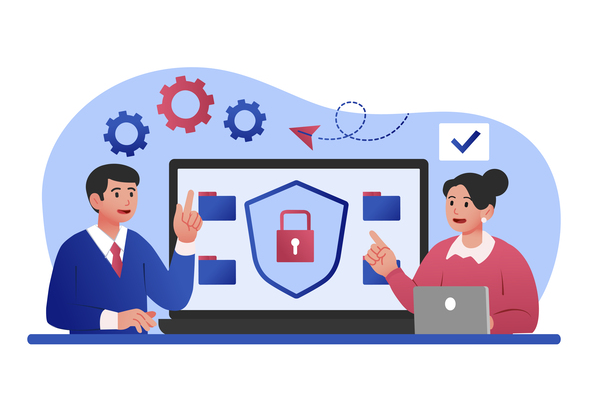
Cyber threats are rising at an alarming rate, with data breaches costing companies millions in damage and reputational loss. A private network acts as a digital fortress, minimizing exposure to external threats. With end-to-end encryption, strict access protocols, and continuous monitoring, your data remains protected from unauthorized access.
This level of security isn’t just about compliance, but it builds trust. Employees can collaborate confidently, knowing their communications are safe. Customers feel secure sharing sensitive information, knowing it’s handled within a protected ecosystem. For leadership, it means peace of mind and reduced risk management overhead.
2. Higher Network Performance and Speed
Slow networks kill productivity. Imagine waiting minutes for a file to upload, video calls freezing during critical meetings, or financial transactions lagging due to poor connectivity. Public networks often suffer from unpredictable speeds and high latency, issues that vanish with a private network.
By dedicating bandwidth solely to your organization, private networks deliver consistent, high-speed performance. Whether you're transferring large datasets, running real-time analytics, or streaming HD video across global offices, operations become faster, smoother, and more efficient. This directly translates to higher employee productivity, quicker decision-making, and better customer service.
3. Eliminates Network Congestion
One of the biggest drawbacks of public networks is congestion, when too many users share the same bandwidth, performance plummets. In contrast, a private network eliminates this problem by providing dedicated bandwidth. Your data doesn’t compete with external traffic, ensuring stable, reliable connections at all times.
This reliability is crucial for industries that rely on real-time operations, like automated manufacturing lines, remote mining equipment, or telemedicine services. With no unexpected slowdowns or downtime, businesses can maintain continuous operations, reduce delays, and meet service-level agreements with confidence.
4. Full Network Customization and Resource Control
No two businesses are the same, and a one-size-fits-all network approach simply doesn’t work. Private networks offer unparalleled customization, allowing companies to configure bandwidth allocation, set security policies, and prioritize critical applications.
Do you need to boost video conferencing during merger negotiations? Done. Do you want to allocate more resources to your ERP system during the month-end closing? Easily adjustable. As your business grows, your private network can scale seamlessly, adding new locations, users, or devices without compromising performance.
This flexibility empowers organizations to innovate, adopt new technologies like IoT and edge computing, and respond quickly to market changes.
Choosing the Right Private Network for Your Business
Not all private networks are created equally. Selecting the right solution requires careful evaluation of your business needs, technical requirements, and long-term goals. Here are key factors to consider:
Factors to Consider When Choosing a Private Network
Choosing the right private network requires considering several important factors, including:
-
Business requirements: Evaluate data usage, application demands, and the geographic scope of your operations.
-
Security and reliability: Choose a provider that offers robust encryption and network uptime guarantees.
-
Ease of management: Opt for networks with simplified administration tools and responsive support teams.
There are several private network solutions available on the market, each with its own advantages. It's important to compare the available options, including considering:
-
VPN (Virtual Private Network): A budget-friendly option ideal for remote teams needing secure access.
-
Dedicated Lines: High-speed, secure physical connections with guaranteed performance.
-
Cloud-based Private Networks: Flexible, scalable, and perfect for growing businesses with dynamic IT needs.
Tips for Evaluating Providers
Choosing the right provider is just as important as the technology itself. Some tips for this evaluation include:
-
Track record: Look for providers with proven experience and positive customer reviews.
-
Service quality vs. cost: Ensure you’re getting full value for your investment.
-
Technical compatibility: The network should integrate smoothly with your existing infrastructure.
Still uncertain? Telkomsel Enterprise offers a Private Network solution trusted by Indonesia’s top enterprises, combining performance, security, and nationwide support.
Overcoming Common Challenges in Private Network Implementation
While private networks offer numerous advantages, they come with their own set of challenges. Knowing how to overcome them is key to successful implementation.
-
Cybersecurity threats: While private networks are more secure than public networks, they are still vulnerable to cyber threats. Implementing a strong firewall, advanced encryption, and cybersecurity training for employees are important steps to mitigate this risk.
-
Maintenance complexity: Managing and maintaining a network can be a complex task. Choosing a solution that offers easy maintenance and reliable technical support from the service provider can help overcome this challenge.
-
Scalability concerns: Business needs can change over time. Choosing a private network solution that offers flexibility and ease of capacity expansion is key.
Conclusion
Investing in a private network is more than a technical upgrade, but it's a strategic decision for businesses aiming to stay competitive. With enhanced data protection, high-speed connectivity, reduced network congestion, and full control over infrastructure, private networks are a game-changer for boosting work efficiency and strengthening corporate communication.
Telkomsel Enterprise provides a proven solution built to elevate your business operations. Featuring local breakout capabilities, this Private Network reduces dependency on public connections and minimizes downtime, even during network disruptions.
Take your operations to the next level with Telkomsel Enterprise’s Private Network solution. Experience secure, high-performance communication tailored to your business goals.
Contact us today to explore how our private network can transform your enterprise’s efficiency and communication landscape.