


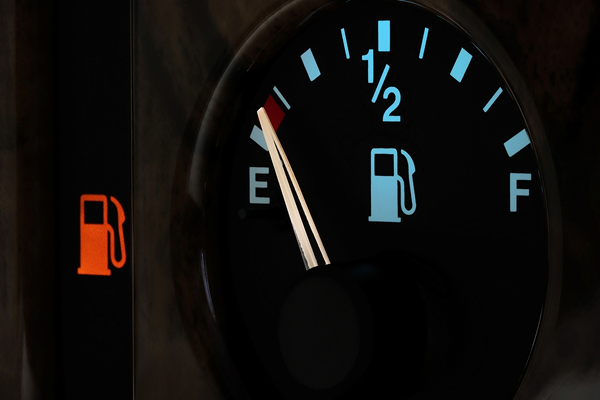


Fuel is often the largest operational expense across many industries, especially in sectors that rely heavily on vehicles, heavy equipment, and continuous machinery use. Consequently, a profound understanding and meticulous management of fuel consumption are paramount for enhancing efficiency while simultaneously curbing unnecessary waste.
One of the most fundamental steps in controlling fuel expenses is knowing how to measure and calculate fuel usage correctly. So, what is fuel consumption, and how can you calculate it accurately? Let’s explore in detail.
What is Fuel Consumption?
What is fuel consumption? Fuel consumption refers to the amount of fuel used by a vehicle, machine, or engine to travel a certain distance or operate over a specific period of time. It is commonly expressed in units such as Liters per kilometer (L/km), Kilometers per liter (km/L), Liters per 100 kilometers (L/100 km), and Liters per hour (for heavy equipment or industrial machines).
This metric is a key performance indicator (KPI) for measuring fuel efficiency, whether for private vehicles, logistics fleets, public transportation systems, or industrial machinery.
Understanding fuel consumption allows companies to benchmark performance, detect inefficiencies, and make data-driven decisions that directly impact operational profitability.
Factors Affecting Fuel Consumption
Fuel usage is influenced by multiple interconnected elements. Recognizing these factors affecting fuel consumption is essential for improving fuel efficiency.
-
Driver Behavior
Aggressive acceleration and braking, unstable speed maintenance, and the habit of leaving the engine running while stationary (idling) can significantly escalate fuel usage. Cultivating smoother driving habits is essential for conservation.
-
Vehicle Condition
Poorly maintained vehicles, such as those with incorrect tire pressure, clogged air filters, or engines that rarely undergo servicing, tend to exhibit much higher fuel consumption rates. Regular maintenance is key to optimal performance.
-
Weather Conditions
Extreme weather, whether heavy rain or intense heat, can impact engine performance. Excessive air conditioning usage during hot weather also increases fuel consumption due to added engine load.
-
Road Conditions
Congested traffic, damaged roads, steep inclines, and frequent stop-and-go situations force engines to work harder. Compared to smooth highway driving, urban congestion significantly increases fuel usage.
-
Load Weight
The heavier the cargo, the more energy required to move the vehicle. This is particularly relevant in logistics and freight industries, where load management directly impacts operational fuel consumption.
Application of Fuel Consumption System
Penerapan sistem fuel consumption banyak digunakan di berbagai sektor industri, antara lain:
-
Logistics
In the logistics sector, managing fuel consumption assists companies in monitoring fleet efficiency, optimizing delivery routes, and suppressing distribution costs.
-
Automotive
The automotive industry utilizes fuel consumption data to develop more efficient, eco-friendly vehicles and serves as a key parameter for vehicle performance metrics.
-
Transportation
Public transportation operators and fleet-based companies use fuel monitoring systems to improve fleet performance, enforce driver accountability, and increase operational efficiency.
Benefits of the Fuel Consumption System
Implementing a fuel consumption monitoring system offers significant advantages for businesses.
-
Improved Operational Efficiency
A fuel consumption system enables companies to obtain detailed, real-time data on fuel usage. This information empowers your management team to identify usage patterns, including areas of waste that were previously difficult to detect.
With precise data analysis, companies can optimize routes, adjust operational schedules, and evaluate vehicle and driver performance. The result is a more controlled operational process, increased productivity, and maximized resource utilization.
-
Preventive Maintenance
Unusual changes or spikes in fuel consumption often serve as early indicators of engine trouble or component issues. By detecting anomalies early, your company can perform maintenance before serious damage occurs. This approach not only extends vehicle lifespan but also reduces the risk of operational downtime that could hinder business activities.
-
Cost Efficiency
Fuel is a recurring operational expense. Even small efficiency improvements can generate significant long-term savings.
By minimizing waste, optimizing routes, and improving vehicle performance, companies can substantially reduce fuel expenditure and enhance overall profitability.
-
Enhanced Security and Transparency
Automated fuel data recording minimizes risks such as fuel theft or unauthorized usage. It also strengthens compliance monitoring and internal accountability.
With better control and transparency, organizations build stronger operational trust both internally and externally.
How to Calculate Fuel Consumption Manually
Understanding how to calculate fuel consumption manually is essential, even if you plan to use a digital fuel consumption calculator or automated system. The simplest formula is:
Fuel Consumption (Liters/100 km) = (Fuel Used in Liters × 100) ÷ Distance Traveled (km)
Example calculation, if a vehicle uses 45 liters of fuel to travel 360 kilometers:
(45 × 100) ÷ 360 = 12.5 Liters/100 km
This means the vehicle consumes 12.5 liters of fuel for every 100 kilometers traveled.
While this method works, manual tracking can be time-consuming and prone to error, especially for companies managing large fleets.
The Importance of Having a Fuel Management System
Unfortunately, calculating fuel consumption manually is often insufficient for medium to large-scale business needs. Therefore, companies require an integrated, data-based fuel management system.
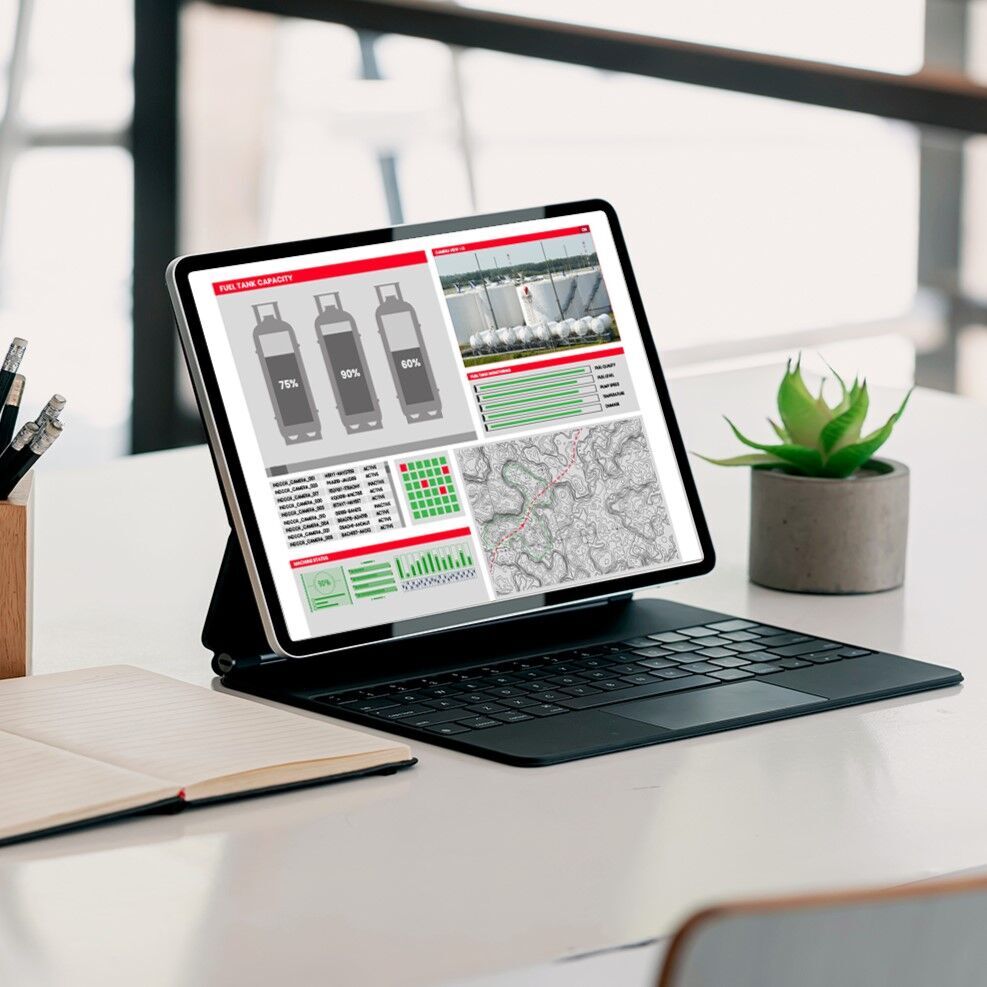
To maximize fuel storage monitoring, Telkomsel Enterprise presents the Fuel Management System solution, capable of providing complete and accurate data and reporting regarding fuel consumption.
With the Fuel Management System solution from Telkomsel Enterprise, your company can monitor fuel usage in real-time, improve operational efficiency, and make strategic decisions based on trusted data.
It is time to optimize your business fuel management now. Contact Telkomsel Enterprise for more information about the Fuel Management System solution!