


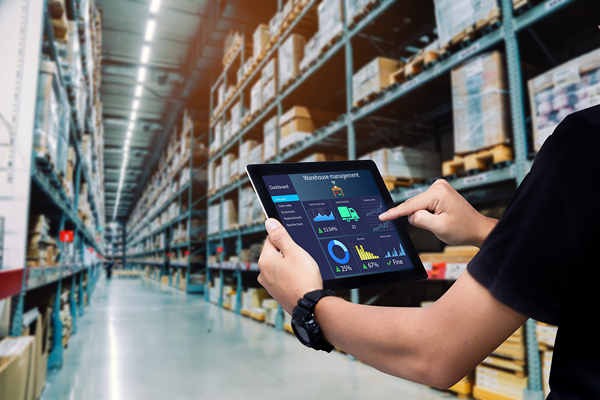


The increasing volume of production and distribution has made warehouse management a critical factor in operational success. A warehouse is no longer just a place to store goods but a strategic part of the supply chain that demands speed, accuracy, and data transparency.
To meet these demands, companies need an integrated digital system that can efficiently manage all warehouse activities. One of the most effective solutions is a warehouse management system (WMS).
What Is a Warehouse Management System (WMS)?
A Warehouse Management System (WMS) is a technology-driven system designed to control and manage all warehouse operations, from receiving goods to delivering them to customers. In other words, WMS helps businesses monitor the movement of goods, manage inventory, organize warehouse layouts, and provide accurate, real-time data.
Through a WMS, businesses can ensure that every item is properly recorded, stored in the right location, and easily retrieved when needed. This system is particularly crucial for large-scale operations in industries such as manufacturing, logistics, retail, and distribution, which require efficient and structured inventory management.
Warehouse Management System Process Flow
A Warehouse Management System includes various interconnected processes to ensure smooth warehouse operations. These processes include:
-
Receiving
The receiving process is the initial stage when goods arrive at the warehouse. The WMS records the incoming goods, verifies the shipping documents, and ensures the quantity and condition of the items meet the required standards.
-
Put-away
After goods are received, the WMS helps determine the most optimal storage location based on the type of item, its pick frequency, and warehouse capacity. This process speeds up the arrangement of items and reduces search time when retrieving them.
-
Picking
Picking refers to the process of retrieving items from storage to fulfill orders. The WMS provides efficient pick path guidance, optimizing time and labor.
-
Packing
At the packing stage, selected items are packed according to shipping standards. The WMS ensures that the packed items match the order to minimize shipping errors.
-
Dispatching
Dispatching involves the shipment of goods from the warehouse. The WMS records the shipping time, destination, and other logistical details to ensure smooth distribution.
-
Returns
WMS also manages the returns process. It tracks returned goods, evaluates their condition, and decides whether they can be restocked or require further action.
-
Stock Take
Stock take or inventory counting ensures that physical stock matches the data in the system. WMS streamlines this process, making it faster and more accurate than manual methods.
-
Reporting
The WMS generates comprehensive operational reports, covering everything from stock movement to inventory accuracy and warehouse performance. These insights are crucial for managerial decision-making.
Benefits of WMS Implementation for Business
Implementing a Warehouse Management System offers numerous advantages for a company’s operations, including:
-
Easier Item Tracking
WMS allows real-time tracking of goods from the moment they enter the warehouse to when they are shipped out. This increases inventory visibility and makes it easier for businesses to know the location and status of each item.
-
Increased Productivity
With structured and automated workflows, warehouse staff productivity can significantly improve. Tasks that once took a long time can now be completed faster and more efficiently.
-
Improved Security
WMS enhances warehouse security through access control, activity logging, and monitoring of goods movement. This reduces the risk of theft or mishandling of goods.
-
Lower Warehouse Costs
The operational efficiency provided by a WMS leads to lower warehouse costs. For instance, it reduces labor costs, shipping errors, and inventory inaccuracies.
-
Resource Efficiency
By optimizing space and labor usage, a WMS helps businesses maximize existing resources without needing to add significant capacity.
-
Reduced Human Error
The automation of warehouse processes reduces reliance on manual data entry, significantly lowering the chance of human error.
Types of Warehouse Management Systems (WMS)
There are several types of Warehouse Management Systems that can be tailored to meet a company’s specific needs. These include:
-
Standalone WMS
A standalone WMS focuses solely on warehouse management without integrating with other business systems. This type is ideal for companies that require a dedicated warehouse solution without the need for complex integration.
-
Enterprise Resource Planning (ERP)
An ERP-integrated WMS allows for warehouse management that connects seamlessly with other business functions, such as finance, production, and distribution. This type offers more comprehensive oversight across business operations.
-
Cloud Warehouse Management System (<H3>)
WMS berbasis cloud menawarkan fleksibilitas tinggi, akses real-time dari berbagai lokasi, serta biaya infrastruktur yang lebih rendah. Jenis ini semakin populer seiring dengan perkembangan teknologi digital.
As the demand for operational efficiency and data visibility in warehouse management grows in the modern era, implementing a Warehouse Management System requires an integrated digital ecosystem. This support is crucial to ensure the system operates optimally, securely, and in alignment with a company’s operational processes.
To aid in this implementation, Telkomsel Enterprise provides a solution through its IoT Smart Manufacturing offering, which includes the Smart Manufacturing Smart Warehouse service. This service is designed to simplify the deployment of WMS within a company’s environment.
With accurate, real-time asset movement monitoring, Smart Manufacturing Smart Warehouse from Telkomsel Enterprise helps streamline inventory processes, improve data transparency, and support data-driven decision-making.
Optimize your industrial warehouse management today with the Smart Manufacturing Smart Warehouse solution from Telkomsel Enterprise, and create a more efficient, secure, and integrated warehouse operation!