


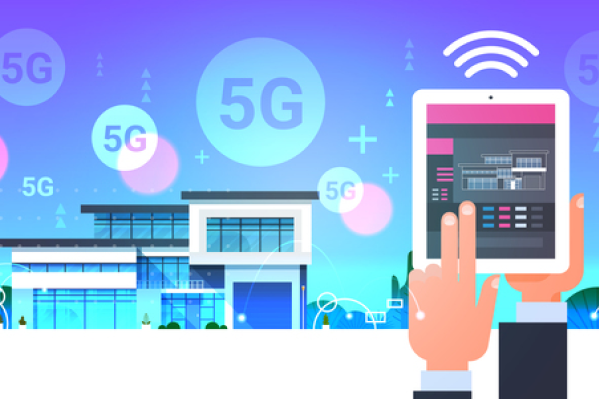


Reliable communication infrastructure has become the backbone of efficient industrial operations. Yet as manufacturing, logistics, and other sectors evolve and become more data-driven, existing technologies like 4G LTE are hitting their performance limits. Enter the 5G network, a technological leap designed to overcome these very challenges.
One of the most critical limitations of 4G networks is their restricted bandwidth capacity. In industries where vast amounts of data must be transferred simultaneously, often in real time and this constraint becomes a bottleneck, delaying decision-making processes and reducing efficiency.
5G technology changes the game. With significantly greater bandwidth and drastically reduced latency, it allows real-time data exchange and the ability to connect millions of devices in one area. This is particularly important for industries that rely on the Internet of Things (IoT), where sensors, machines, and systems must constantly communicate and respond.
By enabling large-scale data collection and analysis, 5G empowers industries to automate operations, increase productivity, and enhance responsiveness, all while maintaining high standards of security and reliability.
The advantages of 5G are not just technical, but they’re also deeply economic. According to a PwC report titled "The Global Economic Impact of 5G", the global GDP is projected to increase by a staggering US$1.3 trillion by 2030 due to widespread 5G adoption.
This growth will come from improved productivity, faster innovation cycles, and the ability to create new services and revenue streams. It illustrates exactly why a 5G network is needed not just for operational upgrades, but as a driver of global economic progress.
Advantages of 5G: The Engine of Modern Industrial Innovation
At its core, 5G is the fifth generation of mobile telecommunications technology. What makes it revolutionary is its ability to deliver speeds up to 100x faster than 4G, with latency as low as 1 millisecond, and support for up to one million connected devices per square kilometer.
Industries that previously struggled with network congestion and lag can now envision fully automated factories, smart logistics systems, and intelligent health services. These capabilities are integral to the vision of Industry 4.0, a smart, interconnected industrial era where Artificial Intelligence (AI), big data analytics, and IoT are seamlessly integrated.
5G is the glue that binds these technologies together, enabling machines to operate autonomously, make decisions faster, and optimize outputs in real time.
5G Applications Across Key Industries
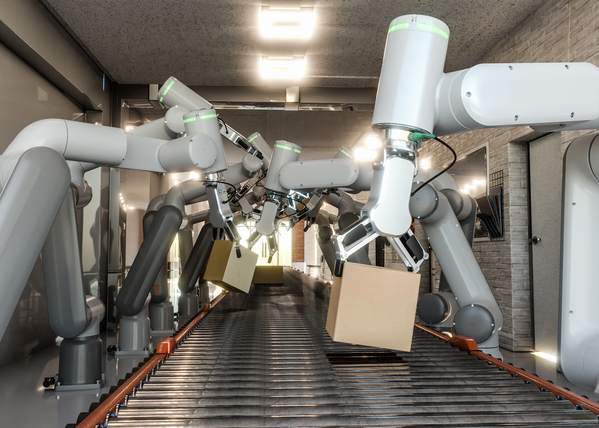
In manufacturing, 5G enables real-time machine monitoring and diagnostics. Operators can access live performance metrics, identify inefficiencies instantly, and prevent costly downtime. Predictive maintenance powered by 5G-connected sensors reduces unplanned outages and optimizes production cycles.
The logistics sector benefits immensely from 5G through the integration of autonomous vehicles and intelligent warehouse management systems. These innovations not only accelerate delivery times but also minimize human error and improve inventory accuracy through real-time tracking and AI-driven forecasting.
Perhaps one of the most groundbreaking uses of 5G is in healthcare. The combination of ultra-low latency and high-speed data transfer opens the door to remote surgeries, where expert surgeons can operate on patients located miles away using robotic tools. For rural areas with limited access to specialists, this could be life changing.
Overall, the advantages of 5G span are far and wide are that it supports faster decision-making, reducing operational costs, and enabling groundbreaking innovations that weren’t possible before.
Challenges of Industrial 5G Implementation
Despite its clear benefits, implementing 5G across industries, especially in Indonesia, comes with notable challenges. These barriers can be broadly divided into infrastructure issues and technical considerations.
1. Infrastructure Limitations
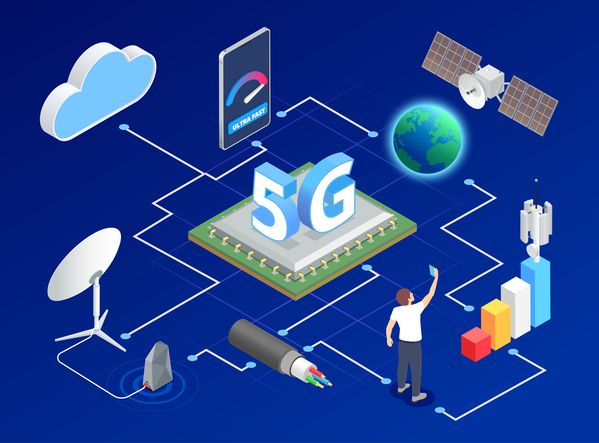
Deploying 5G requires an extensive upgrade of existing infrastructure, especially fiber-optic backhaul networks that can handle the speed and data load. Many industrial zones, especially in remote regions, face logistical and geographical constraints that make such upgrades costly and time-consuming.
Industrial environments also demand infrastructure that can withstand harsh conditions, further increasing the complexity and cost of deployment.
2. Technical Integration
From a technical standpoint, many industries still rely on legacy systems designed to integrate with next-generation networks. This calls for phased modernization of IT systems, which demands significant investment in time, training, and capital.
Security is another critical concern. As industries connect more devices and transfer more sensitive data, they become increasingly vulnerable to cyber threats. This is where network slicing becomes essential.
Network slicing allows industries to create isolated, customized virtual networks with dedicated resources and security protocols tailored to specific applications, whether it's remote machine control or sensitive data transmissions.
Solutions for Seamless 5G Adoption in Industry
To make the transition to 5G smoother and more beneficial, a collaborative approach is crucial. Here’s how various sectors can come together:
1. Cross-Sector Collaboration
One of the key enablers of successful 5G deployment is cross-sector collaboration. In Indonesia, this involves cooperation between telecom providers, equipment manufacturers, and industry end-users.
These partnerships not only help distribute the financial burden of infrastructure but also ensure that solutions are aligned with the specific operational needs of different sectors. The government plays a vital role too, offering regulatory guidance and potentially providing incentives or subsidies to accelerate adoption.
Standardization bodies must also be involved to ensure compatibility and secure implementation of 5G technologies across platforms.
2. Innovation and Future-Proof Infrastructure
Industries must invest in R&D to ensure their infrastructure can evolve alongside rapid technological change. This includes exploring advanced network slicing techniques, edge computing solutions, and dynamic cybersecurity strategies.
Businesses that prioritizes adaptable, secure 5G systems will gain a long-term competitive edge. They’ll be able to support everything from real-time industrial automation to sensitive communication streams, making their operations more agile and future ready.
Conclusion
While the transition to 5G involves considerable investment and planning, the long-term benefits far outweigh the initial challenges. From boosting productivity and reducing operational costs to unlocking new business models, 5G is not just a technological upgrade, but it’s a strategic imperative.
Industries that adopt 5G early stand to gain a competitive advantage in an increasingly connected and automated world. By leveraging the right partners, innovative solutions, and forward-thinking strategies, companies can future-proof their operations and thrive in the digital era.
Telkomsel Enterprise, for instance, offers tailored 5G & MEC (Multi-access Edge Computing) solutions specifically designed to address these infrastructure challenges. With ultra-low latency and high throughput capabilities, Telkomsel Enterprise 5G services enable remote control operations and rapid data processing at the customer site.
These solutions are ideal for boosting productivity, securing data transmissions, and minimizing latency, ultimately helping businesses thrive in a connected, digital-first economy.
Ready to transform your business with next-gen connectivity? Contact us now and explore how 5G technology can revolutionize your industrial processes.