


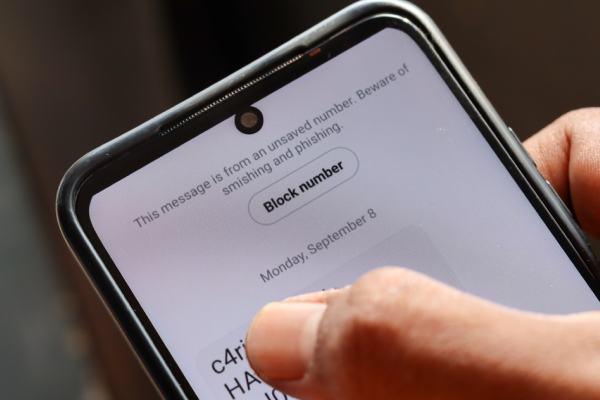


Cybercriminals do not rely on fake emails alone to trick their victims. SMS messages are also frequently used because they feel more personal and are often trusted by mobile users. This type of cyber fraud is known as smishing. But what exactly is smishing, how does it work, and why can it pose a serious risk to both individuals and businesses?
What Is Smishing (SMS Phishing)?
Smishing is a type of cyberattack that uses SMS (Short Message Service) to trick victims into revealing sensitive information, downloading malware, or clicking on malicious links.
The term "smishing" combines two words, SMS and phishing. While traditional phishing commonly relies on email to deceive victims, smishing uses text messages as the main channel for carrying out fraudulent activities.
How Does Smishing Work?
At its core, smishing works by taking advantage of trust and emotion (social engineering). The attacker creates a message that looks legitimate and encourages the recipient to take a specific action.
A typical smishing attack can happen through the following steps:
1. Sending an SMS That Looks Official
The attacker sends a text message impersonating a bank, e-commerce platform, courier service, mobile carrier, or government agency. The goal is to make the message appear completely legitimate, so the recipient lowers their guard.
2. Creating Panic or a Sense of Urgency
The message usually contains an urgent situation designed to make the victim act quickly. For example, the SMS may claim that an account will be blocked, a suspicious transaction has been detected, a package cannot be delivered, or the recipient has won a prize.
The goal is to make the victim react immediately instead of taking time to verify the information.
3. Directing the Victim to a Malicious Link
The SMS may contain a link that leads to a fake website or a fraudulent login page designed to look like an official service. In some cases, clicking the link may also trigger a malware download that can compromise the victim's device.
4. Asking for Sensitive Information
Once the victim opens the link, they may be asked to enter sensitive information such as a username, password, PIN, credit card number, or OTP code. The information is then collected by the attacker and can be used for further fraudulent activities.
5. Misusing the Stolen Information
The stolen information can be used to take over accounts, conduct unauthorized transactions, steal someone's identity, or gain access to internal business systems.
Common Smishing Attack Examples
Smishing tactics continue to change as people's digital behavior evolves. However, several patterns appear frequently and are worth recognizing.
1. Fake Bank SMS Messages
Fake bank messages are among the most common smishing attack examples. A victim may receive an SMS claiming that a suspicious transaction has been detected or that their bank account will be blocked unless they complete an immediate verification process.
2. Fake Prizes and Giveaways
Another common tactic involves fake prizes, vouchers, or giveaways. The attacker sends a message claiming that the recipient has won a prize or a shopping voucher. To claim it, the victim is instructed to click a link or provide personal information.
3. Fake Package Delivery Notifications
The attacker may pretend to be a delivery company and claim that a package has been delayed, could not be delivered, or requires an additional payment. The SMS usually includes a link that leads to a fake website intended to steal the user's personal or payment information.
Signs of Smishing Messages to Recognize
The faster you can identify suspicious SMS messages, the lower your risk of becoming a victim. Watch out for the following signs:
-
The sender is unclear or uses an unusual phone number.
-
The message pressures you to take immediate action.
-
The SMS contains a suspicious website link or a domain that differs from the company's official website.
-
The sender asks for sensitive information such as a password, PIN, credit card number, or OTP code.
-
The message offers an unusually attractive prize or reward without a clear reason.
The Impact of Smishing on Individuals and Businesses
Smishing does not only target individual users. Businesses can also suffer significant losses when employees or customers fall victim to these attacks.
Once an account or sensitive information has been compromised, the consequences can extend beyond the original victim and disrupt wider business operations.
-
Smishing can result in financial losses caused by unauthorized transactions, stolen bank accounts, or misuse of payment information.
-
Data breaches involving customer records, employee details, or confidential company documents, potentially triggering legal consequences and eroding customer trust.
-
Operational disruptions, ranging from locked employee accounts to downtime in digital services that customers rely on.
-
Wider system damage, especially if the smishing message also delivers malware that spreads across networks.
-
Identity theft, where stolen information is used to open new accounts or carry out further fraud under the victim's name, whether an individual or a company.
How to Prevent Smishing
Smishing can be prevented by building safer digital habits and taking a moment to verify suspicious messages before responding. Here are several practical steps individuals and businesses can take:
1. Don't Blindly Trust SMS That Claim to Be from an Institution
When you receive a message demanding immediate action, resist the urge to follow its instructions right away. Take a few minutes to verify whether the information truly comes from the official source.
2. Avoid Clicking on Suspicious Links
If a text message contains a link, don't tap it out of curiosity. If the message claims to be from your bank, a marketplace, or a specific company, access the service directly through its official app or by manually typing the website address into your browser.
3. Never Share Confidential Information
Reputable companies will never ask for your password, PIN, or OTP code via SMS. Never share such details with anyone, even if the sender claims to represent a legitimate institution.
4. Educate All Employees
Even the most advanced security technology won't help much if the people using it can't recognize a threat. Conducting regular cybersecurity training sessions helps employees identify the telltale signs of smishing, significantly reducing the risk of a successful attack.
5. Regularly Update Security Systems
Make sure all devices, applications, and operating systems are regularly updated to the latest versions. Security patches often fix vulnerabilities that cybercriminals actively exploit.
The Importance of Safer Authentication to Reduce Smishing Risks
As a proactive defense measure, many companies already rely on OTP codes. The problem is that this method still carries vulnerabilities, OTP codes are delivered via SMS, which is precisely the channel smishing attackers exploit.
This is where Telco Verify from Telkomsel Enterprise steps in as a game-changing solution. Built on cellular network-based verification (silent authentication), Telco Verify enables the authentication process to happen without ever sending an OTP code through SMS.
Leveraging direct verification through the mobile operator network, Telco Verify significantly reduces the risk of smishing because there is no OTP code for the user to receive or enter. Beyond strengthening protection against verification data theft, this solution also delivers a smoother, more secure login experience for end users.
FAQ
What is smishing?
Smishing is a type of cyberattack that uses SMS (Short Message Service) to deceive victims into revealing sensitive information such as passwords, PINs, OTP codes, or banking details. Attackers typically send text messages that appear to come from banks, e-commerce platforms, courier companies, or other official institutions, hoping the victim will trust the message and follow its instructions.
What is the difference between smishing and phishing?
The main difference between smishing and phishing lies in the delivery channel. Phishing generally operates through email, while smishing specifically uses SMS as the medium to deceive victims.
What are some common smishing attack examples?
Some of the most common smishing attack examples include SMS messages impersonating a bank and requesting verification due to a suspicious transaction, fake prize or giveaway messages asking the victim to click a link to claim a reward, and texts from supposed courier companies stating that a package is on hold or requires additional payment.
Is smishing only carried out through SMS?
Generally speaking, smishing refers to phishing attacks that use SMS as the primary medium. However, as digital communication services continue to evolve, similar tactics can also be found on instant messaging apps that send messages containing malicious links or requests for personal data.