




In the age of Industry 4.0, the smart factory concept emerged as one of the most revolutionary innovations in modern manufacturing. By integrating digital technologies and automation systems, smart factories enable manufacturing operations to become smarter, more efficient, and adaptable to rapidly changing market demands. In today’s fiercely competitive global market, achieving operational efficiency is no longer just a goal, it's a strategic necessity for business survival.
This article delves deeper into what a smart factory is, how it works, its core technologies, and the challenges involved in its implementation. Whether you are new to the concept or looking to expand your knowledge, you’ll find everything you need to understand how smart factories are transforming the manufacturing industry.
Smart Factory Definition
A smart factory refers to a highly digitized and connected production environment where machines, sensors, and devices communicate with each other to create an ecosystem that operates autonomously and more efficiently. Unlike traditional manufacturing systems that rely heavily on human labor and manual processes, a smart factory leverages technologies like the Internet of Things (IoT) to seamlessly connect equipment and improve operational efficiency.
In a smart factory, every machine, sensor, and device is interconnected in real-time, enabling the collection, analysis, and processing of data from the production line. This data-driven approach allows manufacturers to make better decisions, reduce human error, and rapidly adjust to market changes.
In essence, the smart factory is not just a place for manufacturing, it's an intelligent hub of continuous learning, adapting, and evolving to meet new demands and challenges.
Benefits of Smart Factories in Manufacturing Operations
The transformation into a smart factory brings numerous strategic benefits for manufacturing companies. As we explore this in-depth at the Solution Day 2025 panel discussion, here are some of the key advantages that come with adopting smart factory technologies:
-
Enhanced Supply Chain Efficiency
By integrating data from various stages of production, a smart factory provides comprehensive visibility into the supply chain. You can track raw material status, production progress, and distribution in real-time, making it easier to coordinate between suppliers, manufacturers, and distributors. This visibility helps create a more responsive and efficient supply chain, reducing delays and bottlenecks.
-
Reduced Production and Operational Costs
Automation and accurate data analysis enable manufacturers to identify inefficiencies in energy consumption, raw material use, and production time. IoT-enabled machines can also make real-time adjustments, reduce downtime, and minimize waste. These improvements result in a significant reduction in operational costs, increasing the overall profitability of the business.
-
Mitigated Risk of Supply Chain Disruptions
Predictive technologies used in smart factories help detect potential disruptions in the supply chain, whether related to raw material shortages or machine performance issues. Early detection allows businesses to take preventive actions before a major disruption occurs, ensuring continuous production flow and reducing costly downtime.
-
Streamlined Asset Monitoring
With IoT sensors integrated into machines, equipment, and vehicles, a smart factory can continuously monitor the condition of assets. Data regarding factors like temperature, vibration, pressure, and machine performance are automatically transmitted to a central system for analysis. This helps extend the lifespan of assets and ensures optimal performance, reducing maintenance costs.
-
Faster and More Accurate Decision-Making
Leveraging big data and AI, smart factories enable manufacturers to process complex production data quickly and accurately. This allows for data-driven decision-making, which is crucial for optimizing everything from production schedules to machine maintenance strategies. Managers can make informed decisions rapidly, keeping operations running smoothly and adapting to market demands with agility.
-
Real-Time Production Data Collection and Monitoring
One of the standout features of a smart factory is its ability to collect and display production data in real-time. This capability allows businesses to monitor machine performance, labor efficiency, and product quality instantly. With real-time visibility, any discrepancies or issues can be identified and corrected immediately, minimizing waste and improving overall quality.
How a Smart Factory Works
The smart factory operates on the seamless integration of hardware and software systems that communicate through a digital network. Here’s a breakdown of how the system works:
-
Data Collection
IoT devices and sensors across the production line continuously collect data on machine conditions, temperature, pressure, production volume, and other important variables.
-
Data Connectivity and Communication
The collected data is sent through the internet or cloud systems where it is stored and processed. This connectivity allows all devices and systems to communicate in real-time, enabling a responsive, adaptive production environment.
-
Data Analytics and AI Processing
The raw data is processed and analyzed using big data analytics and AI algorithms to uncover patterns and insights. For example, the system may detect a specific pattern indicating potential machine failure or product defects.
-
Automated Decision-Making
Based on the analysis, the system can automatically take corrective actions, such as adjusting machine speeds, scheduling maintenance, or optimizing production schedules. This automation reduces the need for human intervention and accelerates response times.
-
Continuous Monitoring and Optimization
The entire system is designed to be adaptive, constantly learning from new data to improve efficiency, performance, and market alignment. This continuous optimization ensures that the smart factory remains competitive and can meet ever-changing demands.
Key Technologies Enabling Smart Factories
The success of a smart factory relies heavily on the integration of advanced technologies. Some of the key technologies that support smart manufacturing operations include:
-
Big Data and Analytics
Big data analytics processes vast amounts of production data, identifying trends, anomalies, and areas for improvement. This allows manufacturers to fine-tune operations and achieve greater efficiency.
-
Artificial Intelligence (AI)
AI analyzes patterns in production data, predicts potential failures, and automates decision-making. In manufacturing, AI can help detect defects, predict machine failures, and optimize production lines.
-
Cloud Computing
Cloud computing provides the backbone for data storage and processing, enabling businesses to access their data from anywhere at any time. With high scalability and security, cloud systems ensure smooth, efficient operations.
-
Robotics
Industrial robots play a crucial role in automating production processes. With their precision and consistent speed, robots enhance productivity, reduce errors, and lower workplace safety risks.
-
Augmented Reality (AR) and Virtual Reality (VR)
AR and VR technologies are used for technician training, simulating assembly processes, and machine maintenance. These immersive tools help operators better understand real-world scenarios, reducing operational mistakes.
-
Cybersecurity
As all devices in a smart factory are interconnected, cybersecurity is paramount. Strong security systems are required to protect sensitive data and prevent cyberattacks, data breaches, or unauthorized access.
-
Internet of Things (IoT)
IoT is the backbone of the smart factory, allowing devices and machines to communicate with each other in real-time. This data collection and exchange improve operational efficiency and provides valuable insights for decision-making.
Challenges of Implementing a Smart Factory
While the benefits of a smart factory are clear, the transition to a smart manufacturing environment is not without its challenges. Companies must be prepared for a range of issues, including:
-
Shifting to a digital system requires a workforce with high technical skills, making intensive training programs necessary to help employees adapt to new technologies.
-
The implementation of a smart factory demands substantial investment in infrastructure, IoT devices, and robust digital security systems.
-
The risk of industrial data breaches is a serious threat and must be mitigated with strong cybersecurity measures.
-
Fast, reliable internet connection, dependable servers, and cloud-based storage systems are essential for the seamless operation of a smart factory.
-
Integrating legacy systems with new technologies can be time-consuming and costly, requiring careful planning and significant resources.
-
There is an increasing demand for skilled professionals in fields like AI, IoT, and data analytics, while the supply of such talent remains limited.
-
Digital transformation often faces resistance from employees who are accustomed to traditional ways of working, making change management a critical part of the process.
-
Managing large volumes of data efficiently is crucial to prevent system overloads and ensure smooth operations.
-
The high dependence on automated systems introduces risks if there are technical failures or cyberattacks that disrupt operations.
-
To safeguard business continuity, companies need to have a strong risk mitigation plan and a disaster recovery plan in place for quick recovery in case of system failures or disruptions.
Smart Factory Implementation Example
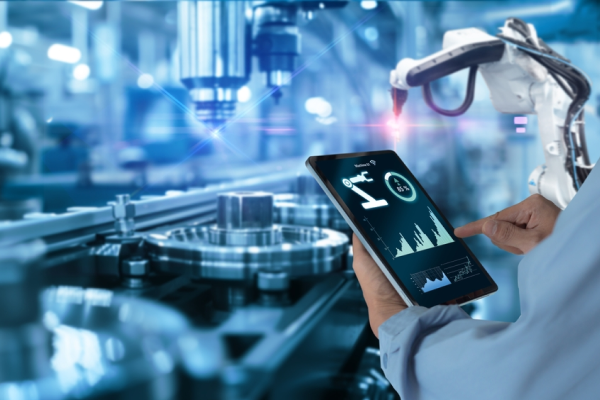
One of the most common applications of a smart factory is predictive maintenance using IoT technology. In this system, sensors are installed on machines to monitor operational conditions such as temperature, pressure, vibration, and energy consumption.
The data from these sensors is transmitted to an analytics platform in real-time. AI then analyzes the data patterns to predict when a machine is likely to experience a failure. With this valuable information, maintenance teams can perform repairs before a major disruption occurs.
As a result, production downtime is significantly reduced, maintenance costs become more efficient, and the lifespan of machines is extended. This is a clear example of how smart factory technology can enhance productivity while simultaneously lowering operational costs.
IoT Smart Manufacturing Solution for Smart Factory Implementation from Telkomsel Enterprise
The transition to a smart factory requires reliable, integrated, and easy-to-implement solutions. That’s why Telkomsel Enterprise offers IoT Smart Manufacturing, an intelligent solution specifically designed to support the manufacturing industry in optimizing production processes.
With advanced IoT technology, IoT Smart Manufacturing enables your company to:
-
Monitor machine performance in real-time
-
Collect and analyze production data automatically
-
Optimize machine maintenance schedules
-
Improve energy efficiency
-
Reduce potential operational disruptions
The integration of IoT, big data, and cloud computing empowers manufacturing companies to make data-driven strategic decisions that achieve maximum efficiency. IoT Smart Manufacturing from Telkomsel Enterprise is designed to meet these needs. Plus, with the support of Telkomsel’s extensive and stable network, the entire system can operate consistently and securely.
With smart features that support real-time machine performance monitoring and production data management, IoT Smart Manufacturing from Telkomsel Enterprise will help your company achieve higher operational efficiency and sustainable productivity. Don’t miss the opportunity to achieve greater production efficiency. It’s time to make your factory smarter and more efficient with IoT Smart Manufacturing from Telkomsel Enterprise!