




One-Time Passwords (OTPs) have become a go-to method for securing access to accounts and personal data. But behind their convenience lies a growing risk: OTP fraud. So, how can businesses and users protect sensitive data without complicating the user journey?
What Is an OTP and How Does It Work?
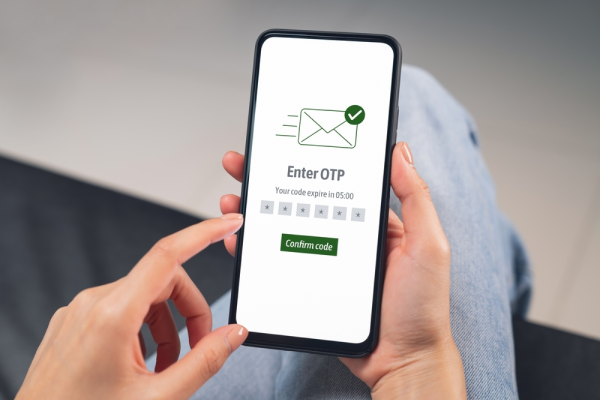
OTPs, or One-Time Passwords, are a type of two-factor authentication (2FA) designed to provide extra protection for your account. These typically 6-digit codes are generated randomly and are valid for a very short time, usually 2 to 5 minutes.
The beauty of OTPs lies in their uniqueness and limited validity. Each code is sent via a chosen communication channel, like SMS, WhatsApp, or email. Since the code expires quickly and can only be used once, intercepting it doesn’t guarantee access, at least in theory.
However, cybercriminals have found ways to exploit this very system through OTP fraud, a rising threat where scammers trick users into revealing their temporary codes, often via phishing, SIM swapping, or fake customer service calls.
In many cases, victims unknowingly hand over access to their bank accounts, email, or personal data simply because they trusted a seemingly legitimate request for an OTP code.
Types of OTP Systems
OTPs can be delivered in several different formats. Knowing the options helps users and businesses choose what best fits their needs:
1. SMS-Based OTP
The most widely used method, OTPs sent via standard text message. It's quick and convenient, requiring only a working phone number, but it’s also vulnerable to network disruptions and certain types of attacks.
2. Email OTP
OTPs can also be sent to a registered email address. This method tends to be more reliable than SMS, especially in areas with poor cellular coverage.
3. WhatsApp OTP
If WhatsApp is already your primary communication tool, this method offers a fast and familiar way to receive OTPs, ideal for mobile-first users.
4. Call OTP
In this method, users receive an automated voice call that reads out the OTP. It’s helpful for users who might miss written codes, though the code is usually repeated only a few times.
5. Flash Call OTP
Instead of delivering a spoken message, this method uses the last few digits of an incoming call number as the OTP. It’s fast, seamless, and requires no user input beyond recognition.
Common OTP Fraud Cases You Should Know
Cybercriminals are constantly innovating to steal OTPs and gain unauthorized access. Understanding real-world OTP fraud cases helps illustrate the risks involved and why stronger protections are necessary. Here are two of the most common cases you should know about.
1. SIM Swap via Fake Network Upgrade
In this scam, fraudsters pose as mobile network operators offering a “free upgrade.” Victims are tricked into sharing OTPs or PINs, which are then used to activate a new SIM controlled by the attacker.
Once the switch is made, all OTPs go to the attacker, giving them access to banking apps and other sensitive platforms.
2. Bank Fee Notification Scams
In this tactic, attackers pretend to represent a bank, warning users of a new "fee policy." To “opt-out,” victims are asked to update their data, during which they unknowingly share their OTPs. The attacker then uses these codes for fraudulent transactions.
These tactics rely on urgency and trust, making them effective and hard to detect until it's too late.
The Hidden Risks of OTP Systems
Despite their popularity, OTPs are not foolproof. Below are some of the most critical vulnerabilities:
1. Phishing Attacks
Phishing remains a major risk. Fraudsters create realistic-looking emails or websites that ask for OTPs, then use them in real-time to hijack accounts.
2. Man-in-the-Middle (MitM) Attacks
On unencrypted channels like SMS, OTPs can be intercepted using advanced techniques that exploit weaknesses in telecom protocols such as SS7.
3. User Friction
OTP systems can be frustrating for users, especially when codes are delayed, lost, or require multiple app switches. These friction points often result in abandoned transactions.
OTP Fraud Prevention with Seamless Authenticator from Telkomsel Enterprise
Tired of outdated OTP systems? OTP fraud prevention with Seamless Authenticator is now possible with Telco Verify from Telkomsel Enterprise. This innovative solution enables real-time identity verification that is secure, frictionless, and invisible to the end user.
With Telco Verify, no need to manually enter OTPs, reduced risk of phishing or SIM swap attacks, and improved user experience without compromising security
Ready to protect your business and stay ahead of cybercriminals? Contact us today to learn how Telco Verify can transform your digital security strategy.