




Running digital ads but not getting the number of clicks you expected? A low click through rate is often the main reason behind underperforming campaigns. No matter how much you spend on advertising, if people see your ads but choose not to click them, your campaign is missing valuable opportunities to generate traffic, leads, and sales.
A strong click through rate indicates that your ads successfully capture attention and encourage users to take action. Beyond increasing website traffic, CTR also affects engagement, campaign performance, advertising costs, and conversion potential. That's why understanding how CTR works and knowing how to improve it is essential for every digital marketing strategy.
What Is Click Through Rate?
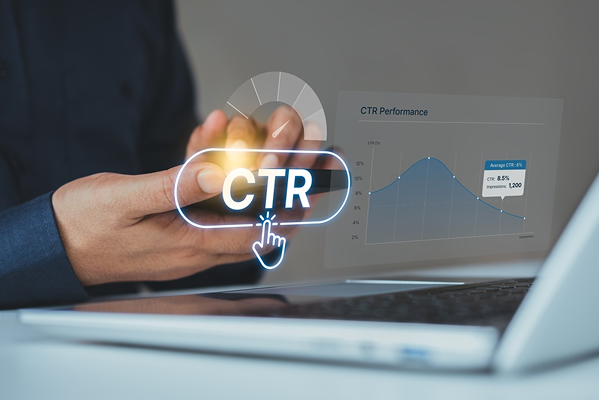
Click through rate (CTR) measures the percentage of users who click on an advertisement, email, search result, link, or other digital content after seeing it. It is widely used across search engine advertising, social media campaigns, display advertising, email marketing, and many other digital channels.
Simply put, CTR reflects how attractive and relevant your message is to your target audience. An ad that receives thousands of impressions but only a handful of clicks usually signals that the content isn't compelling enough or doesn't match user intent.
On the other hand, a high click through rate suggests that your advertisement resonates with users, captures their attention, and motivates them to learn more by clicking. Because of this, CTR has become one of the primary performance indicators marketers rely on when evaluating digital campaigns.
Why Click Through Rate Matters in Digital Marketing
Click through rate is much more than a simple statistic. It directly impacts the overall success of your digital marketing efforts in several important ways.
1. Improves Return on Investment (ROI)
A higher CTR means more qualified visitors reach your website or landing page. The more relevant traffic your campaigns generate, the greater your opportunities to increase conversions, sales, and overall return on investment.
2. Helps Lower Advertising Costs
Advertising platforms such as Google Ads and social media networks use CTR as one of the indicators of ad quality. Better-performing ads often receive higher quality scores, which can reduce your cost per click while improving ad visibility.
3. Measures Ad Relevance
CTR shows whether your advertising message matches your audience's needs and interests. A low CTR often indicates a mismatch between your keywords, targeting, offer, or ad copy.
4. Supports Campaign Optimization
CTR data helps marketers identify which campaigns perform well and which need improvement. These insights make ongoing optimization easier and allow businesses to continually improve campaign effectiveness.
Click Through Rate Calculation
Understanding click through rate calculation is simple. Use this formula:
CTR = (Total Clicks ÷ Total Impressions) × 100%
Suppose your advertisement receives 20,000 impressions and 800 clicks.
The calculation would be:
CTR = (800 ÷ 20,000) × 100%
CTR = 0.04 × 100%
CTR = 4%
This means that 4% of everyone who saw the advertisement clicked on it.
Factors That Affect Click Through Rate
Many different elements determine whether an advertisement earns a high or low CTR.
1. Relevance to Search Intent
Understanding user intent is critical. When your advertisement directly answers what people are searching for, they're much more likely to click. Ads that don't match user expectations are often ignored.
2. Strong Headlines and Ad Copy
Your headline is the first thing people notice. It should be clear, relevant, benefit-focused, and attention-grabbing.
Your description should then reinforce that interest by explaining the value or solution your business offers in a concise, yet persuasive way.
3. Ad Placement
Advertisements displayed in highly visible positions naturally receive more attention than those placed where users rarely look. Better placement increases visibility and creates more opportunities for clicks.
4. Effective Calls-to-Action (CTA)
Clear action-oriented phrases encourage users to take the next step. Examples include: "Learn More", "Get Started Today", "Claim Your Offer", "Contact Us", "Sign Up Now". An effective CTA removes uncertainty and tells users exactly what to do next.
5. Landing Page Experience
Generating clicks is only part of the process. Once users arrive, your landing page should deliver a smooth experience.
Slow loading speeds, confusing navigation, poor mobile responsiveness, or inconsistent messaging can reduce campaign effectiveness, even if your CTR is high.
6. Ad Extensions
Ad extensions provide additional information such as phone numbers, business locations, additional page links, promotional offers. These extra details increase visibility while giving users more reasons to click.
7. Audience Targeting
Showing advertisements to the right audience remains one of the biggest factors influencing CTR. Effective audience segmentation ensures your ads reach users who are genuinely interested in your products or services.
8. External Market Factors
CTR can also fluctuate because of industry trends, competitor activity, seasonal promotions, consumer behavior, and economic conditions. Regular campaign reviews help businesses adapt to changing market conditions.
Benefits of a High Click Through Rate
A high CTR offers several advantages that directly support business growth. Some of the biggest benefits include:
-
Bringing more qualified traffic to your website.
-
Increasing opportunities for purchases, sign-ups, and lead generation.
-
Lowering advertising costs while improving budget efficiency.
-
Demonstrating that your messaging resonates with your audience.
-
Providing valuable customer insights for future marketing decisions.
-
Strengthening brand awareness and credibility.
Common Reasons Your Click Through Rate Is Low
Before improving your CTR, it's important to identify what's holding your campaigns back. Common causes include:
-
Weak or uninteresting headlines
-
Poor audience targeting
-
Irrelevant keywords
-
Unclear call-to-action
-
Generic or unconvincing ad descriptions
-
Poor ad placement
-
Low-quality visuals
-
Landing pages that don't match the advertisement
-
Heavy competition
-
Poor campaign timing
Finding the root cause allows businesses to make targeted improvements rather than guessing what went wrong.
How to Improve CTR in Digital Marketing Campaigns
Here are several strategies you can implement to effectively improve your click-through rate (CTR):
1. Create Engaging and Relevant Headlines
Use headlines that are specific, relevant, and focused on the benefits your audience will gain. For example, instead of using a generic headline like “Digital Solutions for Businesses,” a more effective approach would be “Increase Sales by Up to 30% with the Right Digital Strategy.”
Headlines that directly address audience needs tend to achieve higher CTR because they feel more relevant to the challenges or goals users are trying to solve.
2. Add a Clear Call-to-Action (CTA)
A Call-to-Action (CTA) guides users toward taking specific action after viewing an advertisement. Make sure your CTA uses simple, direct language that aligns with your campaign objectives. Examples include “Try It for Free,” “Learn More,” “Contact Us Today,” or “Get Exclusive Offers.”
Your CTA should also match the customer journey stage. Audiences who are unfamiliar with your brand may respond better to educational CTAs, while those who have already shown interest can be guided toward more conversion-focused actions.
3. Create Informative and Persuasive Ad Descriptions
Besides the headline, the ad description plays an important role in convincing audiences to click. Focus on the solutions and value your product provides rather than simply listing features.
For example, instead of saying, “Our software comes with complete automation features,” a stronger message would be, “Automate your business processes and save up to 50% of your operational time.” This approach helps audiences understand the benefits they will receive, making them more likely to engage with the ad.
4. Conduct Regular Testing
Regular testing, including A/B testing, is essential to identify which elements deliver the best performance. You can test various campaign components such as headlines, descriptions, CTAs, visuals, ad formats, and landing pages.
For example, comparing two different headline versions can help determine which one generates a higher CTR. By using a data-driven approach, businesses can continuously refine their campaigns and improve performance over time.
5. Use Eye-Catching Visuals
Make sure your visuals are high-quality, aligned with your brand identity, and support the main advertising message. For video ads, deliver the key message within the first few seconds, as users often decide whether to continue watching or skip an ad within a very short time.
6. Optimize Keyword Usage
For campaigns that use search advertising, keyword selection has a significant impact on CTR. The right keywords help your ads reach users who are actively searching for relevant information, products, or services.
Conduct regular keyword research to understand the terms most frequently used by your target audience. In addition to primary keywords, consider using more specific long-tail keywords, as they typically have lower competition and stronger relevance to user intent.
Make sure your selected keywords are also included in your ad headlines and descriptions to create a more relevant experience when users see your ads in search results.
7. Tailor Ads to Your Target Audience
Every audience segment has different characteristics, needs, and communication preferences. As a result, an approach that works for one segment may not be effective for another.
For example, younger audiences may respond better to casual language and dynamic visuals, while professional audiences may prefer clear, credible information focused on business benefits.
Adjusting your advertising message based on audience characteristics can increase relevance and make users feel that the ad is specifically designed for their needs. The more personalized and relevant an ad is, the higher the chance that audiences will click and continue engaging with your brand.
8. Ensure Your Landing Page Matches the Ad
A high CTR delivers greater value when users receive a consistent experience after clicking the ad. Therefore, make sure your landing page aligns with the message and offer presented in the advertisement.
If an ad promotes a discount or special offer, users should be able to find that information immediately after reaching the landing page. A mismatch between the ad and landing page can cause visitors to leave quickly, reducing the overall effectiveness of the campaign.
CTR is an important indicator that reflects audience interest in the advertisements being displayed. By understanding the factors that influence CTR and applying the right optimization strategies, businesses can continuously improve their digital marketing performance.
With DigiAds from Telkomsel Enterprise, businesses can maximize CTR and enhance digital campaign performance through targeted advertising solutions.
DigiAds from Telkomsel Enterprise: A Solution to Improve CTR and Digital Campaign Effectiveness
A high CTR is not only driven by creative advertising but also by the ability to deliver the right message to the right audience through the right channels.
With advanced data insights and accurate audience segmentation capabilities, DigiAds from Telkomsel Enterprise helps businesses run digital advertising campaigns that are more effective, targeted, and measurable.
When advertising messages reach the right audience, opportunities for engagement and conversions increase significantly. Start maximizing your digital campaign performance with DigiAds and achieve more measurable advertising results.
FAQ:
What is a good CTR?
A good CTR varies depending on the platform and industry. However, a CTR above 2% is generally considered a good benchmark for many digital campaigns. A higher CTR usually indicates that an advertisement is relevant and engaging to the target audience.
What is click-through rate (CTR)?
Click-through rate (CTR) is the percentage of users who click on an advertisement or link after seeing it. This metric is used to measure the effectiveness of a digital marketing campaign.
What does CTR mean?
CTR is an indicator that shows how often users click on an advertisement compared to the number of impressions it receives. CTR helps measure audience interest and engagement toward an advertisement or displayed content.
How is CTR calculated?
The click through rate calculation formula is:
CTR = (Total Clicks ÷ Total Impressions) × 100%
For example, if your advertisement receives 500 clicks from 10,000 impressions, your CTR is 5%.