




In the era of rapid digital transformation, the finance sector relies heavily on network stability and speed. Every single transaction, ranging from digital payments and fund transfers to accessing internal banking systems, demands a reliable connection.
However, challenges such as network congestion can hinder operational smoothness and potentially trigger financial risks or reputational damage.
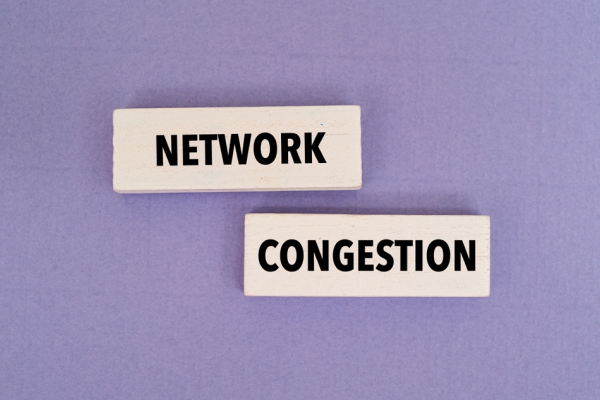
What Is Network Congestion?
Network congestion refers to a situation in which the amount of data traffic within a network exceeds the available bandwidth capacity, causing delays in data transmission or even failure to send data. Think of it like a busy highway during rush hour, where the sheer volume of cars causes a traffic jam.
In the finance sector, network congestion is a serious concern. Banks, insurance companies, fintech platforms, and other financial institutions rely on stable networks to process transactions in real-time. Any network congestion can lead to delays in transactions, which could directly affect customer trust and satisfaction.
Signs of Network Congestion
Recognizing the early signs of network congestion is crucial to prevent it from worsening. Common symptoms include:
-
Internal systems or financial applications take longer to load data than usual.
-
Response time between request and data reception increases, making the transaction process feel delayed.
-
Packet loss occurs, where partial data fails to reach the destination, which can cause errors or system failures.
-
Access to the core banking system, transaction applications, or monitoring dashboards becomes unstable.
-
Online coordination activities experience disruptions, such as choppy voice calls or frozen screens (freeze).
How Network Congestion Can Occur?
What causes network congestion? It happens when the amount of data sent through the network exceeds the available bandwidth capacity. In the finance sector, traffic spikes often occur during busy operational hours. For instance, during market opening, end-of-month periods, or specific promotional periods.
Additionally, the rapid growth of digital services significantly increases network load. If infrastructure is not upgraded in line with growing needs, network jams become difficult to avoid.
Other factors such as large-scale system updates, the use of cloud-based applications, and intensive data analytics activities also contribute to increased bandwidth consumption. Understanding the network congestion definition causes is vital to mitigating these risks early.
Causes of Network Congestion
Several key factors cause network congestion in a financial corporate environment, including:
-
Inadequate Bandwidth Capacity
As explained previously, network infrastructure that is not updated according to operational needs can become a primary cause of data jams.
-
Sudden Traffic Spikes
Transaction activities that increase drastically in a short time, for example, during double-date promos or payday sale periods, can burden the network heavily.
-
Poor Traffic Management
Without data priority settings (traffic prioritization), all types of traffic are treated equally, including non-critical data.
-
Simultaneous Use of Heavy Applications
Video-based applications, cloud storage, and real-time analytics systems can consume bandwidth in large quantities.
-
Weak Network Security
Cyber-attacks such as Distributed Denial of Service (DDoS) can also trigger network congestion intentionally.
Solutions to Overcome Network Congestion in Finance Companies
How to deal with network congestion effectively? To maintain operational stability, companies in the financial sector need to implement comprehensive and sustainable solutions. For example:
-
Upgrade Bandwidth Capacity
Conducting periodic evaluations of network needs is very important. If traffic load continues to increase, adding bandwidth capacity becomes a fundamental solution to prevent network congestion.
-
Implementing Quality of Service (QoS)
QoS allows you to prioritize critical traffic, such as financial transactions and core systems, compared to non-critical activities. Thus, main service performance remains maintained even when traffic spikes occur. This is a key form of congestion control.
-
Real-Time Network Monitoring
Using network monitoring systems helps detect potential network congestion before the impact spreads widely. Analytic data from this monitoring can also become the basis for strategic decision-making.
-
Optimizing Cloud-Based Infrastructure
Choosing cloud services that have high scalability helps companies adjust capacity according to needs. However, integration with a stable network remains a key success factor.
-
Using Private Network
One of the most effective solutions for the finance sector is the use of a Private Network. A private network provides a special communication path that does not mix with public traffic, making it more stable and secure.
Stable network performance is the primary foundation for maintaining smooth operations in the financial sector. Disruptions caused by network congestion not only lead to transaction delays but also have the potential to damage reputation and reduce customer trust.
Stable network performance is the main foundation in maintaining the smoothness of financial sector operations. Disruptions due to network congestion not only impact transaction delays but also have the potential to damage reputation and decrease customer trust.
As a stakeholder in the finance industry, you need to ensure that network infrastructure can support business needs that continue to develop. That is why adopting Private Network technology from Telkomsel Enterprise becomes a strategic step to reduce the risk of data jams while increasing system security.
Private Network from Telkomsel Enterprise is the best solution to improve business and company operations with stronger, faster, and safer signals. With a network designed specifically according to company needs, the risk of network congestion can be minimized significantly. Additionally, the layered security system applied to the private network helps protect sensitive data from potential cyber threats.
Now is the time to strengthen your company's network foundation. Optimize your business operations with Private Network from Telkomsel Enterprise so that every transaction runs smoothly without obstacles!