


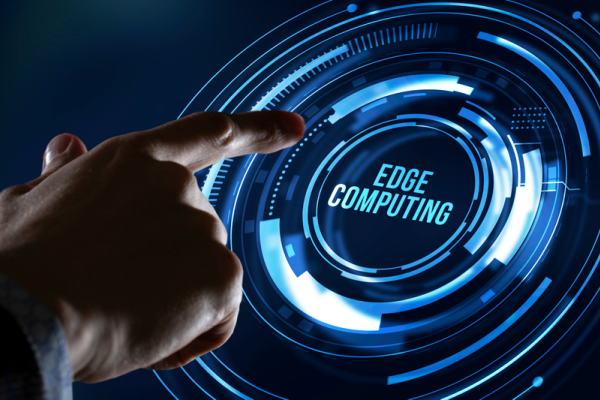


Edge computing has rapidly become a cornerstone technology for driving digital transformation, especially when companies must process massive volumes of data at lightning speed. Unlike conventional methods that rely heavily on centralized cloud or data centers, this innovative approach pushes data processing closer to its source. Consequently, it drastically reduces latency, optimizes bandwidth usage, and accelerates decision-making.
When paired with 5G networks, famous for ultra-low latency and high-speed connectivity, edge computing supercharges operational efficiency, responsiveness, and reliability across diverse industrial sectors.
Understanding Edge Computing
If you are wondering what is edge computing, it is a distributed computing concept that shifts data processing away from centralized clouds or distant data centers to locations much closer to the data source. These sources include IoT devices, sensors, manufacturing machines, or local servers. Through this decentralized approach, data gets analyzed instantly without the need to travel back and forth to a central hub first.
Unlike traditional computing models entirely dependent on the cloud, this framework allows preliminary analysis to happen directly on edge devices. Only the most critical, refined data is then sent to the cloud for long-term storage, advanced analytics, or system integration.
As IoT device adoption skyrockets and the demand for real-time data processing grows, minimizing network congestion and boosting efficiency becomes crucial. This technology also serves as the foundational backbone for groundbreaking innovations like Industry 4.0, smart manufacturing, smart logistics, autonomous vehicles, and AI-driven applications.
How Does Edge Computing Work?
To deliver lightning-fast data processing, you might ask how does edge computing work. The process unfolds through several streamlined stages:
1. Data Collection
The journey begins when various devices, such as IoT sensors, surveillance cameras, RFID tags, GPS trackers, production machines, wearables, and other smart gadgets, generate continuous streams of data.
This information can include:
-
Production machine temperatures
-
Logistics vehicle locations
-
Patient vitals from medical devices
-
Retail store foot traffic
-
Building energy consumption
-
Regional air quality metrics
All these insights are gathered continuously to form the basis for subsequent analysis.
2. Processing on Edge Devices
Instead of blindly sending every raw data point to the cloud, edge devices like edge gateways, edge servers, or industrial PCs handle the initial computation locally.
During this phase, the edge setup will:
-
Process and filter raw data
-
Identify anomalies instantly
-
Discard irrelevant information
-
Execute lightweight AI algorithms
-
Trigger automated device controls
Because this processing happens right at the source, the turnaround time is dramatically faster compared to routing everything through a distant data center.
3. Real-Time Analysis and Data Filtering
Once processed, the edge system performs real-time analysis to pinpoint only the truly vital information.
For instance, an AI camera in a factory doesn't need to upload 24/7 raw video footage to the cloud. The system simply transmits alerts the moment it detects a production defect or abnormal machine behavior. This smart filtering drastically saves bandwidth and lightens the storage burden.
4. Instant Decision-Making
The final stage involves automated or semi-automated decision-making. Examples include:
-
Machines halting automatically when sensors detect overheating
-
Traffic lights adjusting in real-time based on vehicle density
-
Production robots dynamically tweaking their operational speed
-
Security systems instantly triggering alarms upon spotting suspicious activity
All these actions occur in mere milliseconds, making operations incredibly responsive.
Benefits of Edge Computing for Businesses
Deploying this technology delivers a multitude of advantages for your daily business operations. Here are the key benefits:
1. Real-Time Responsiveness
Processing data near its source allows systems to react to conditions immediately, bypassing the wait time for cloud communication. This is critical for industries requiring millisecond-level decisions, such as manufacturing, transportation, energy, and healthcare.
2. Drastic Latency Reduction
Latency refers to the delay between data transmission and the receipt of processed results. In traditional cloud setups, latency spikes because data must travel long distances to reach a central server. By keeping computation local, this delay is significantly minimized.
3. Bandwidth Conservation
Since only the most essential data is transmitted, bandwidth usage becomes highly efficient. This not only cuts down on data communication costs but also prevents network bottlenecks when thousands of IoT devices operate simultaneously.
4. Enhanced Data Security
With the majority of data processed locally, the risk of interception during transmission drops considerably. Your company maintains tighter control over sensitive information before it reaches a central cloud.
5. Scalability and Flexibility
This architecture allows businesses to add new devices, sensors, or operational sites without overhauling the central infrastructure. It supports highly flexible business expansion tailored to specific operational needs.
6. Operational Reliability
Ketika koneksi internet mengalami gangguan, perangkat edge tetap dapat menjalankan fungsi-fungsi penting secara lokal. Dengan demikian, operasional bisnis tetap berjalan meskipun akses menuju cloud sedang tidak tersedia.
7. Industrial Automation
Edge frameworks power automation by delivering rapid, precise data processing. Industrial robots, automated conveyors, predictive maintenance systems, and AI-based quality control all perform optimally thanks to the instant response capabilities of edge setups.
8. IoT Implementation
As the number of IoT devices continues to grow, so does the demand for fast and efficient data processing. In other words, edge computing has become a critical foundation for IoT implementation by processing data closer to the source, enabling it to manage information from thousands of connected devices efficiently without overloading the central network.
Examples of Edge Computing in Various Industries
To understand its practical value, let us explore some real-world examples of edge computing across different sectors:
Manufacturing Industry
In manufacturing, this technology monitors machine health in real-time, detects potential failures, optimizes production workflows, and executes predictive maintenance. Sensors attached to equipment send data directly to an edge server, enabling companies to intervene before a breakdown causes costly production downtime.
Healthcare Sector
Hospitals are leveraging edge setups to process patient data directly from medical devices. Heart rate monitors, oxygen trackers, and wearables can instantly alert medical staff if a patient's condition deteriorates sharply, eliminating the wait time for cloud processing.
Smart City
Local governments utilize edge frameworks to manage smart city infrastructure. Applications include adaptive traffic lights, air quality monitoring, smart parking management, AI-powered security cameras, and rapid disaster mitigation systems that require immediate responses to changing field conditions.
Retail
In retail, edge solutions elevate the customer experience through real-time consumer behavior analysis. The technology also powers cashierless stores, automated inventory management, dynamic digital signage, and foot-traffic analytics to refine marketing strategies.
Challenges in Implementing Edge Computing
Despite its immense benefits, deploying this architecture comes with specific challenges that require careful planning:
1. Limited Resources
Edge devices typically possess smaller computational, memory, and storage capacities compared to massive cloud data centers. Therefore, you must carefully select which data and applications are best suited for edge processing to maintain peak performance.
2. Management Complexity
The more edge devices you deploy, the more complex the monitoring, configuration, software updating, and maintenance become. A centralized management system is essential to keep all devices running efficiently.
3. Initial Investment Costs
Setting up an edge infrastructure requires upfront investment in hardware, sensors, edge gateways, local servers, software, and integration with legacy systems. While the initial costs can be substantial, this investment pays off through long-term operational efficiency and cost savings.
4. Need for Stable Connectivity
Even though processing happens at the edge, inter-device communication, data synchronization, and cloud integration still demand fast, stable connectivity. Without a reliable network, the full potential of edge setups cannot be realized.
5. Data Communication Security
A larger number of connected devices expands the cyber threat surface. It is crucial to implement data encryption, device authentication, network segmentation, and robust security monitoring to protect communications between edge nodes and central data centers.
The Importance of Private Networks in Supporting Edge Computing
Addressing the challenges mentioned above, the success of an edge strategy relies not just on device capabilities, but on the quality of the connectivity linking the entire digital ecosystem.
Unfortunately, in large-scale operational scenarios, public networks often fall short of meeting business demands for ultra-low latency, high security, and consistent service quality. Consequently, many enterprises are adopting private networks as the communication backbone for their edge deployments.
You can find this exact solution in Private Network by Telkomsel Enterprise. This solution delivers a secure, stable, and purpose-built private network tailored for business data communication. With Telkomsel's highly reliable connectivity, your company can seamlessly link various edge devices, sensors, machines, and business systems into one integrated ecosystem.
Telkomsel Enterprise's Private Network also accelerates data communication between edge devices through 5G technology support, ensuring real-time data processing runs at peak optimization. This grants your company superior operational visibility, slashes response times, and elevates overall business process efficiency.
Optimize your edge computing deployment with Telkomsel Enterprise's Private Network today! With a dependable private network, your business can accelerate data communication, boost productivity, and achieve highly efficient real-time operations.
FAQ:
What is edge computing?
Edge computing is a data processing method executed much closer to the data source. such as sensors, IoT devices, or machines, enabling significantly faster responses. This approach helps minimize latency and optimizes bandwidth utilization.
What is the difference between edge computing and cloud computing?
Edge computing setups process data near the location of the generating devices, whereas cloud computing handles data in distant central servers or cloud hubs. Edge is ideal for real-time needs, while cloud excels at massive data storage and large-scale analytics.
Why is edge computing important for IoT?
Edge computing allows IoT devices to process data in real-time without constantly sending everything to the cloud. This reduces latency, conserves bandwidth, and dramatically speeds up response times for IoT applications.