


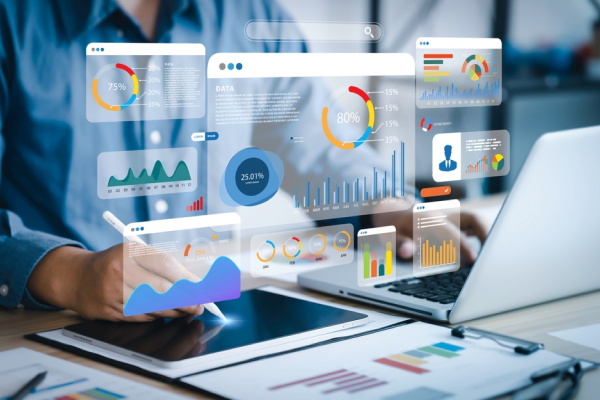


As companies generate and collect massive amounts of information every second, the ability to extract meaningful insights from this data has become crucial for staying ahead in the market. Whether you're looking to enhance customer experiences, streamline operations, or predict future trends, leveraging big data analytics can unlock unprecedented opportunities for growth and innovation.
But what exactly is big data analytics? Why is it important? And how can your business implement it effectively to drive measurable results?
Let’s dive deep into everything you need to know about big data analytics, including its core functions, implementation process, real-world applications, and the competitive edge it offers modern enterprises.
What Is Big Data Analytics?
Big data analytics is the sophisticated process of examining, processing, and interpreting enormous, diverse, and complex datasets that traditional data systems cannot handle. These datasets come from a variety of sources such as social media platforms, business transactions, IoT sensors, mobile devices, and other digital footprints.
Unlike conventional data analysis methods, big data analytics goes beyond simple reporting. It enables organizations to uncover hidden patterns, detect anomalies, forecast outcomes, and prescribe actions based on historical and real-time data. The ultimate goal? To make smarter, faster, and more strategic decisions that align with business goals.
There are four key types of big data analytics:
-
Descriptive Analytics: Understanding what has happened
-
Diagnostic Analytics: Investigating why it happened
-
Predictive Analytics: Forecasting what might happen
-
Prescriptive Analytics: Advising on what actions to take
By integrating these analytical approaches, companies can respond proactively to market shifts, gain deeper insights into customer behavior, and enhance operational efficiency along with product or service innovation.
Why Is Big Data Analytics Important for Business?
The value of big data analytics lies in its ability to transform raw data into actionable intelligence. Here’s how it empowers organizations across critical areas:
-
Identifying Patterns and Market Trends
Analyzing customer behavior, sales transactions, social media interactions, and operational data enables businesses to track market trends and shifting consumer preferences in real time. This intelligence is invaluable for crafting targeted marketing strategies, innovating products, and fine-tuning services to stay competitive and relevant.
-
Efficient Processing of Massive Data Volumes
Modern enterprises deal with terabytes, sometimes petabytes, of data flowing from multiple channels. Using technologies like cloud computing, artificial intelligence (AI), and machine learning, big data analytics allow businesses to store, manage, and analyze this data efficiently.
This ensures that valuable information isn’t lost in the noise and can be transformed into meaningful reports and dashboards.
-
Predictive Insights and Proactive Planning
Big data analytics equips companies with the ability to predict future scenarios based on historical data. This means anticipating product demand surges, operational risks, or customer churn. With these insights, businesses can implement preventive strategies, optimize inventory management, and improve service delivery well ahead of time, minimizing risks and maximizing opportunities.
The Process of Big Data Analytics: A Step-by-Step Guide
Implementing big data analytics involves several interconnected stages. Each step plays a crucial role in ensuring accurate, insightful, and timely results.
1. Data Mining
This involves digging deep into large datasets to discover hidden correlations, trends, and behavioral patterns that are not immediately obvious. Data mining helps businesses uncover new opportunities, segment customers more accurately, and detect potential risks through existing data.
2. Data Collection
Before analysis can begin, relevant data must be collected from internal and external sources. Internal sources include CRM systems, ERP platforms, and transaction logs, while external sources may consist of social media feeds, third-party APIs, and IoT devices. Ensuring data accuracy, legality, and relevance is essential at this stage.
3. Data Storing
Once collected, data needs to be stored securely and accessibly. Modern storage solutions like data warehouses, data lakes, and cloud-based platforms offer scalable and flexible options. Choosing the right storage system depends on factors such as data structure, volume, access frequency, and security requirements.
4. Data Cleaning
Raw data is often incomplete, inconsistent, or duplicate. Data cleaning, also known as data scrubbing, removes inaccuracies and prepares the dataset for analysis. Clean data ensures that insights are reliable and not skewed by errors or irrelevant entries.
5. Data Analysis
Using statistical methods, predictive modeling, or AI algorithms, data is analyzed to extract valuable information that answers business questions or forecasts trends. Visualization tools help present these results clearly for decision-makers.
6. Data Consumption
Finally, insights are shared with stakeholders who use them to make informed decisions. Whether it’s the marketing team adjusting campaign strategies, supply chain managers optimizing logistics, or executives refining business models, effective data consumption drives action and accountability across departments.
Example of Big Data Analytics in Action
To better understand how big data analytics works in practice, let’s explore some compelling use cases across industries.
-
Customer Service
Big data analytics allow companies to monitor customer needs and complaints in real-time and deliver personalized, swift solutions. By analyzing data from various channels like phone, email, chat, and social media, businesses identify common issues, complaint trends, and optimal response times, boosting customer satisfaction and loyalty.
-
Supply Chain Management
By analyzing data from suppliers, inventory, shipping, and market demand, companies predict stock requirements accurately, optimize delivery schedules, and reduce operational costs. For example, integrating weather data, traffic conditions, and demand trends helps anticipate disruptions and ensures timely product delivery.
-
Data-Driven Marketing
Businesses analyze consumer behavior, product preferences, and past campaign responses to design highly targeted marketing messages. Using demographic and browsing data, personalized advertising across email, social media, or digital platforms increases conversion rates and maximizes ROI.
Big data analytics is reshaping how businesses operate and compete. From enhancing customer relationships to driving innovation and operational excellence, the benefits are immense.
Whether you're a startup or a global enterprise, harnessing the full potential of your data can give you a significant edge in today’s competitive landscape. The key is to start small, invest wisely, and continuously refine your approach to stay agile and get insight ready.
Ready to take your business strategy to the next level with data-driven decisions?
Discover how MSIGHT from Telkomsel Enterprise delivers intelligent, real-time insights tailored to your unique needs. Empower your team with actionable intelligence that fuels growth, improves efficiency, and elevates customer satisfaction.
Contact us today to learn more about our big data analytics solutions and how we can help transform your business.