

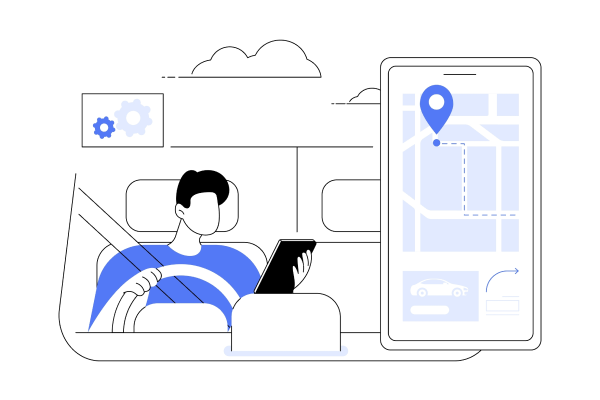


Have you ever watched your delivery fleet zigzag across the city, unsure whether they’re taking the most efficient path? Or maybe you’ve found yourself stuck in expensive, time-wasting business trips that don’t seem to justify the cost?
If you’re managing a business with any sort of logistics or delivery component, these inefficiencies might feel all too familiar. But the good news is, there’s a smarter, tech-driven answer: route optimization.
Let’s dive deep into what route optimization really means, why it’s essential for modern logistics, and how the right route optimization solution can revolutionize your operations.
What is Route Optimization?
Far from being just about choosing the shortest path between Point A and Point B, route optimization is a highly intelligent process that calculates the most efficient route based on various real-world constraints. Think of it as a data-driven, algorithm-powered strategy to make your entire delivery operation smarter, not just faster.
Many business owners misunderstand route optimization as simple route planning. But the truth is, this solution dives much deeper. It analyzes traffic conditions in real-time, vehicle capacity, driver schedules, delivery windows, weather patterns, and even unexpected disruptions. All of these variables work together to ensure that every delivery is on time, cost-effective, and aligned with operational goals.
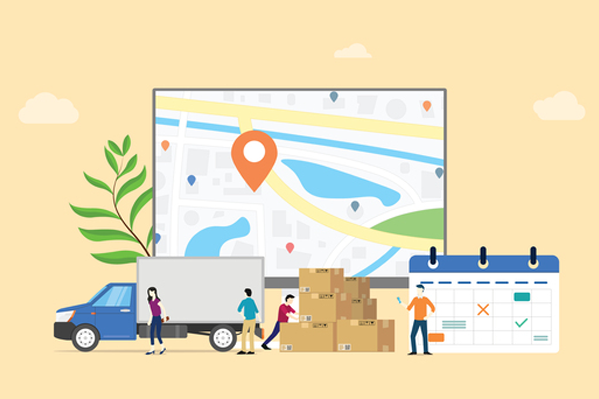
Imagine planning optimal delivery routes for 20 stops using five different vehicles. Done manually, this would take hours and still leave room for inefficiencies. With a route optimization solution, the system handles this complexity in seconds, far more accurately and consistently.
Route Optimization vs. Route Planning: What’s the Difference?
Many business owners mistakenly believe that route planning and route optimization are one and the same. In reality, they are two distinct approaches and understanding the difference is key to achieving greater logistics efficiency.
Different Core Approaches
Route planning is a more traditional and straightforward method. It is often done manually, using basic tools like Google Maps or Excel spreadsheets. The goal is to arrange delivery sequences based on estimated distances and travel times.
Route optimization, on the other hand, takes a smarter, data-driven approach. It uses advanced algorithms to generate the most efficient routes, not just based on distance, but by evaluating multiple real-world variables like delivery time windows, fuel efficiency, and vehicle limitations.
Key Variables Considered in Route Optimization
Unlike route planning, which focuses mostly on distance, a route optimization solution takes into account a broader set of critical variables, such as:
Real-time traffic conditions and congestion forecasts Customer delivery time windows to ensure punctual arrivals Vehicle capacity, including maximum load and vehicle type Local regulations and driver working hours for legal compliance Weather and road conditions that may impact travel time
These factors allow the system to create highly optimized routes tailored to your specific delivery needs.
Decision-Making Methods
Route planning heavily relies on human intuition and experience. While experience certainly has its value, it can also introduce bias. For instance, a route planner might prefer a familiar road simply because they’ve always used it, without considering whether it’s actually the most efficient path based on current data.
With route optimization, every decision is made based on data, not gut feelings. Using machine learning, the system analyzes past delivery patterns, detects recurring trends, and even predicts potential disruptions. This results in faster, more accurate decisions and better adaptability to real-world changes on the ground.
Scalability and Consistency
As your business grows, so does the complexity of managing delivery operations. Without technological support, coordinating dozens of routes and vehicles can quickly become overwhelming.
This is where route optimization truly excels. It’s built to handle large-scale logistics operations, from hundreds to thousands of delivery points and fleet units.
What’s more, the system remains stable and reliable, even as complexity increases. That means your logistics performance won’t suffer as you scale, allowing you to focus on growing your business with confidence.
Why Implementing Route Optimization Is Important
Customer expectations have evolved. Where there was once flexibility around delivery times, today’s customers demand accuracy and reliability. A route optimization solution answers this demand, efficiently and cost-effectively.
Cut Down Operational Costs
Imagine reducing your fleet’s total mileage by 10 - 15%. That’s exactly what route optimization can help you achieve. By shortening the distance traveled, businesses save significantly on fuel, minimize overtime hours, and reduce vehicle maintenance expenses.
For example, a company operating 10 delivery vehicles averaging 200 km per day could save 20–30 km per vehicle. Over a month, those savings in fuel and upkeep costs can add up to tens of millions of rupiah or thousands of dollars.
And it doesn’t stop at fuel. Fewer kilometers mean less wear and tear, resulting in lower maintenance and fewer replacements, prolonging the life of your fleet.
Plus, drivers can complete more deliveries in the same amount of time, improving your delivery output and increasing revenue per working hour.
Faster Deliveries, Greater Accuracy, Happier Customers
Customer satisfaction begins with reliable, on-time delivery. A route optimization solution helps you achieve this level of consistency, day in and day out.
Reliable service builds trust, and trust leads to customer loyalty. When your customers know they can count on you, they’re not just more likely to return, they’ll become advocates for your business and recommend it to others.
Stay Ahead of the Competition
In logistics, speed and efficiency are everything. Businesses that can deliver more in less time and at a lower cost, will always have the upper hand.
With route optimization, you gain a powerful competitive edge over companies still relying on outdated, manual planning methods. You’ll move faster, smarter, and more profitably, putting you a step ahead in a competitive market.
Efficiency That’s Also Eco-Friendly
Route optimization isn't just good for business, but it's good for the planet. Shorter routes mean less fuel consumption and, in turn, lower carbon emissions.
That translates into reduced environmental impact and a greener brand image. In a world where sustainability matters more than ever, showing that your business is environmentally responsible can boost your brand reputation and attract eco-conscious customers.
A Practical Guide to Implementing Route Optimization
Successfully adopting a route optimization solution requires a well-structured, strategic approach. Many companies fail in their implementation efforts due to poor preparation and unrealistic expectations. To ensure your business unlocks the full potential of this powerful tool, follow the step-by-step guide below.
1. Involve All Stakeholders Early On
Before implementation begins, make sure everyone involved, management, operations, drivers, and even customer service, fully understands the goals and benefits of route optimization. Hold workshops, town halls, or team meetings to communicate your vision and the potential impact on the business.
When all stakeholders feel involved from the start, you’ll face far less resistance to change.
2. Understand Your Current Operations in Detail
Begin by thoroughly documenting your existing logistics setup. This includes daily transaction volume, demand patterns, vehicle characteristics, driver capabilities, and service level agreements (SLAs) with customers.
Identify operational pain points and inefficiencies in your current routing system. Then, set SMART KPIs, Specific, Measurable, Achievable, Relevant, and Time-bound to track implementation success.
3. Choose a Reliable Technology Partner
Technology is the backbone of any route optimization solution. But don’t just focus on the software’s features. Evaluate whether the vendor aligns with your company culture, offers responsive support, and can be a long-term partner.
Key factors to consider when selecting a partner:
-
Proven track record in your industry
-
Scalable system that grows with your business
-
Seamless integration with your current systems
-
Comprehensive training and after-sales support
-
Transparent and flexible pricing models
4. Run a Pilot Test in the Right Area
Don’t roll out route optimization across your entire operation all at once. Start with a pilot in one area that represents your business's complexity, but isn’t mission-critical if challenges arise.
Choose a region with moderate complexity and sufficient historical data to compare performance before and after implementation. This allows you to validate the system and make adjustments before scaling up.
5. Assign Your Best Team for the Pilot Phase
Use your most adaptable, communicative, and open-minded drivers and staff for the pilot. Their attitude can make or break the transition.
Provide thorough training, not just on how to use the system, but also why the change matters to the business. Helping your team understand the “why” builds stronger buy-in.
6. Roll Out Gradually
Once the pilot proves successful, expand implementation gradually to other areas. Avoid deploying company-wide too quickly.
A phased rollout allows you to:
-
Identify and fix problems early
-
Refine processes based on real feedback
-
Maintain service quality during the transition
-
Manage change at a sustainable pace
7. Actively Monitor and Evaluate Performance
Route optimization is not a one-and-done project, it’s a continuous process. Establish real-time monitoring tools to track key performance indicators (KPIs), such as:
-
On-time delivery rates
-
Fuel consumption per trip
-
Customer satisfaction levels
-
Driver productivity
-
System usage and adoption rates
This ensures you can spot issues, optimize further, and measure ROI accurately.
8. Focus on Customer Experience
Route optimization shouldn’t just be seen as an internal efficiency upgrade, it’s an opportunity to enhance the customer journey.
With faster, more predictable, and consistent deliveries, you can deliver a better overall experience. Proactively communicate service improvements to your customers. Let them know how the changes will benefit them directly.
9. Invest in Ongoing Training
Technology is only as effective as the people using it. Provide in-depth training, not just on system operation but on mindset and behavioral change.
Foster a culture that embraces innovation and continuous learning. This is critical for long-term success.
10. Leverage the Data to Drive Smarter Decisions
Once your system is live, you’ll gain access to valuable data across every aspect of your delivery operations. Use it to identify patterns, uncover new opportunities, and continuously refine your processes.
A data-driven approach turns your routing system into a strategic asset, not just a logistics tool.
Transform Your Delivery Management, One Smarter Route at a Time
Optimizing your routes doesn’t just streamline delivery, it transforms your entire logistics strategy. With the right route optimization solution, you can cut costs, delight customers, and build a future-ready business.
FleetSense by Telkomsel Enterprise is your all-in-one route optimization platform, built to support large-scale delivery operations. Whether you’re managing 10 or 1,000 vehicles, FleetSense ensures every kilometer counts.
Ready to take control of your logistics performance?
Contact us today and discover how FleetSense can help your business go further, faster, safer, and smarter.