


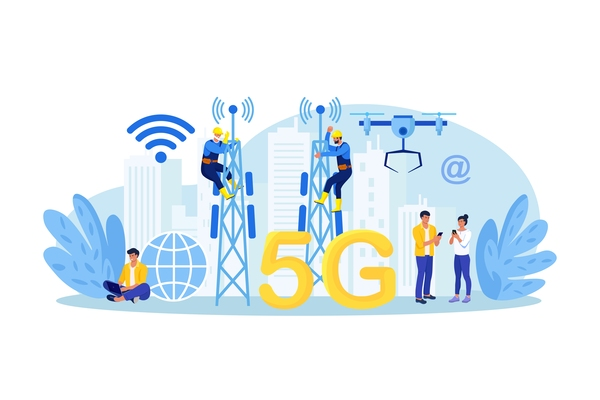


The development of 5G technology and Multi-access Edge Computing (MEC) is unlocking the full potential of the Internet of Things (IoT). These two innovations are shaping the future by enabling real-time communication, faster data processing, and smarter infrastructure across all sectors.
5G is the newest generation of cellular network technology. It offers ultra-fast internet speeds, significantly lower latency, and far greater bandwidth than previous generations. These capabilities make it the ideal backbone for the expanding world of connected devices.
A GSMA report predicts that by 2025, there will be over 1.2 billion 5G connections globally. This massive adoption is expected to have a profound impact on the entire IoT ecosystem.
Thanks to its ability to support a massive number of connected devices simultaneously, 5G becomes the backbone for developing more advanced and efficient IoT solutions. Its unique capabilities, high speed, low delay, and large-scale connectivity are perfectly aligned with the evolving demands of modern IoT applications.
While 5G delivers the speed, Multi-access Edge Computing (MEC) Multi-access Edge Computing (MEC) is a cutting-edge technology that enables data processing to occur closer to where it's generated, rather than relying solely on centralized cloud infrastructures. With MEC, data from IoT devices can be processed locally, eliminating the need to send it to distant data centers.
This proximity-based computing approach not only reduces latency and improves response times but also enhances data security and privacy through localized processing. When integrated with the power of 5G, MEC creates a high-performance environment where real-time decision-making becomes both feasible and optimal.
Together, 5G and MEC open up new possibilities for innovation in sectors like healthcare, manufacturing, automotive, and more. For example, in transportation, autonomous vehicles use 5G networks to communicate with road infrastructure and other vehicles in real time, while MEC ensures rapid processing of sensor data for instant decisions.
Let’s explore how these technologies are transforming industries and driving innovation.
How 5G & MEC Technology Transform the Internet of Things (IoT)
5G provides the ideal foundation for scalable and reliable IoT deployment, thanks to three key characteristics:
Rising Adoption of IoT Across Sectors
The Internet of Things (IoT) refers to the network of physical devices embedded with sensors, software, and connectivity that allows them to collect and exchange data over the internet. These devices can be anything from smart thermostats and wearable fitness trackers to factory machinery and traffic systems.
Despite its benefits, IoT has faced some critical challenges, particularly when it comes to handling the massive volume of data produced by interconnected devices. Limited bandwidth, high latency, and data security concerns are ongoing obstacles that prevent optimal IoT performance.
Existing networks often struggle to keep up with the demands of millions of simultaneously connected devices. This is exactly where 5G technology shines.
1. Faster Speeds & Higher Bandwidth
5G provides ultra-fast data transmission and high bandwidth, enabling large-scale real-time data communication. This is vital for applications that rely on streaming high-resolution video, transferring big data, or supporting advanced analytics in industrial environments.
This speed also enables next-generation IoT use cases that require near-instant communication and reliability, like remote surgeries or automated logistics.
2. Ultra-Low Latency
One of 5G's most powerful features is its low latency, which means the time between sending and receiving data is almost negligible. This is essential for time-sensitive applications such as autonomous vehicles, emergency response systems, and remote robotics.
Low latency allows devices to react and respond in real time, crucial for precision, safety, and performance.
3. Massive Device Connectivity (mMTC)
5G supports Massive Machine-Type Communications (mMTC), which allows a vast number of devices to be connected simultaneously. This is the foundation for smart cities, industrial automation, and advanced healthcare systems.
When combined with MEC, 5G enables high-volume device communication without compromising speed, reliability, or data integrity.
Maximizing IoT Potential Through Multi-access Edge Computing (MEC) Integration
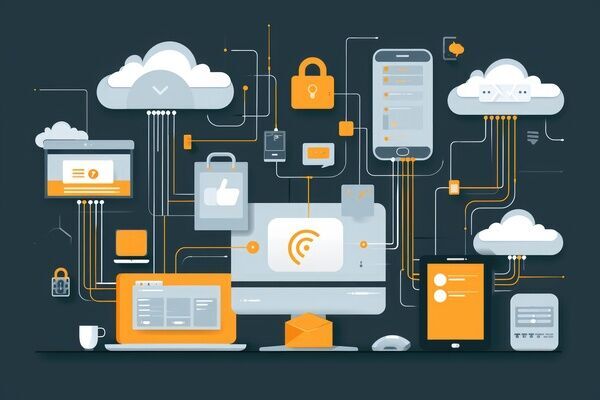
MEC pushes computing resources to the edge of the network, closer to where data is generated. This architecture is highly beneficial for real-time IoT applications where speed and data control are critical.
By avoiding the need to send every bit of data to a centralized cloud, MEC allows systems to operate more efficiently and securely.
Benefits of Integrating MEC and 5G for IoT
The integration of MEC with 5G brings various benefits to IoT, including:
1. Real-Time Decision Making with Minimal Latency
MEC dramatically reduces latency, enabling instant data processing and response. This is critical in situations where immediate action is required, such as self-driving vehicles or remote health monitoring.
2. Enhanced Data Security and Privacy
Processing data locally ensures that sensitive information stays closer to its source, lowering the risk of breaches. This is especially crucial in sectors like healthcare, finance, and defense, where data privacy regulations are strict.
3. Improved Network Efficiency and Scalability
By reducing the volume of data that travels through the core network, MEC increases bandwidth availability and reduces network congestion. This leads to higher scalability, allowing businesses to connect to more devices without degrading performance.
Real-World Examples of 5G and MEC in IoT Applications
Let’s take a closer look at some specific examples of how 5G and MEC are transforming IoT applications across industries.
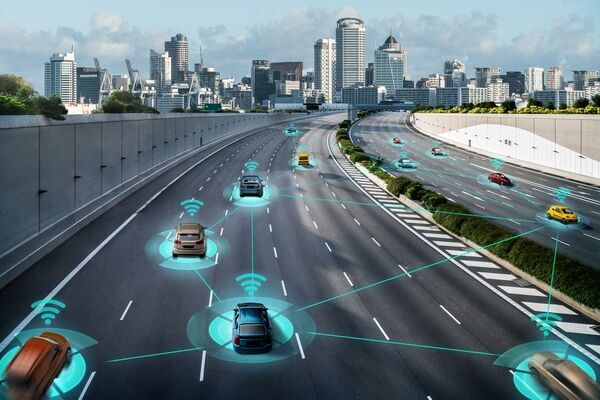
1. Autonomous Vehicles
One of the most complex and promising use cases of IoT is autonomous vehicles. These cars rely on a network of sensors, including cameras, radar, and LiDAR, that generate a constant stream of environmental data.
This data needs to be processed in real-time to make driving decisions such as obstacle detection, lane recognition, and traffic response.
Using 5G for real-time V2V (Vehicle-to-Vehicle) and V2I (Vehicle-to-Infrastructure) communication, combined with MEC for fast local processing, ensures safer and more responsive autonomous systems.
2. Smart Manufacturing
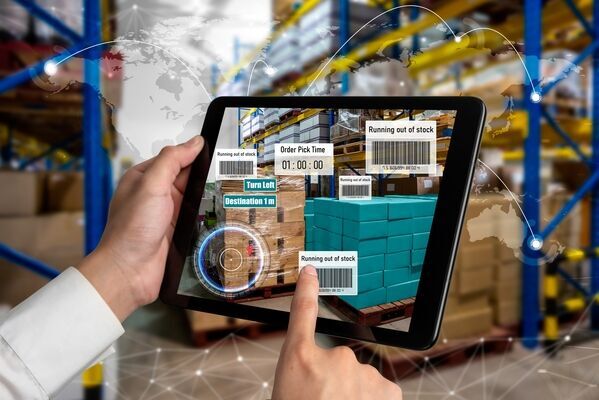
The manufacturing industry is undergoing a digital transformation with IoT-driven smart factories. Connected sensors monitor machine conditions, like temperature, pressure, and speed, in real time, enabling predictive maintenance and reducing unplanned downtime.
With 5G and MEC, this data is processed locally, allowing for immediate corrective actions. As a result, production lines become more efficient, product quality improves, and operational costs decrease.
This integration supports Industry 4.0 initiatives, helping manufacturers achieve higher productivity, flexibility, and competitiveness.
3. Smart Healthcare and IoMT
The Internet of Medical Things (IoMT) is revolutionizing healthcare. Devices like heart monitors, blood pressure sensors, and oxygen meters can now transmit patient data continuously.
5G ensures this data is delivered without delay, while MEC allows real-time analysis closer to the patient, leading to faster diagnoses and emergency interventions when needed.
Beyond monitoring, 5G & MEC also power telemedicine and telesurgery. Surgeons can perform remote operations using robotics, and doctors can consult with patients anywhere, with minimal latency and maximum reliability.
Conclusion
The integration of 5G and MEC is redefining the landscape of the Internet of Things (IoT). With unparalleled speed, low latency, and edge-level intelligence, businesses across sectors can now unlock the true potential of their connected systems.
For businesses ready to embrace this transformation, Telkomsel Enterprise offers industry-leading 5G and MEC solutions designed to solve network infrastructure challenges and boost business efficiency and productivity.
With ultra-reliable low-latency connections, high throughput, and localized data processing, these solutions optimize business operations and elevate productivity.
From addressing unstable networks and security concerns to enabling remote control and real-time decision making, Telkomsel Enterprise' s 5G & MEC infrastructure is tailored for businesses of the future.
Ready to future-proof your business with advanced IoT solutions? Contact us today and explore how 5G & MEC can empower your operations.