




Speed and precision stand as the ultimate hurdles for digital businesses managing operations, especially within warehousing. By deploying a smart warehouse, companies can streamline storage and inventory handling through faster, highly efficient, and fully integrated technology.
Traditional setups now face bottlenecks when trying to meet the demands of modern, fast-paced operations. Consequently, a growing number of enterprises are pivoting smart warehouse solutions to boost effectiveness and support a more adaptable business model.
What Is Smart Warehouse?
If you ask what is smart warehouse, the literal translation is simply an intelligent storage facility. But what does "smart" actually mean in this context?
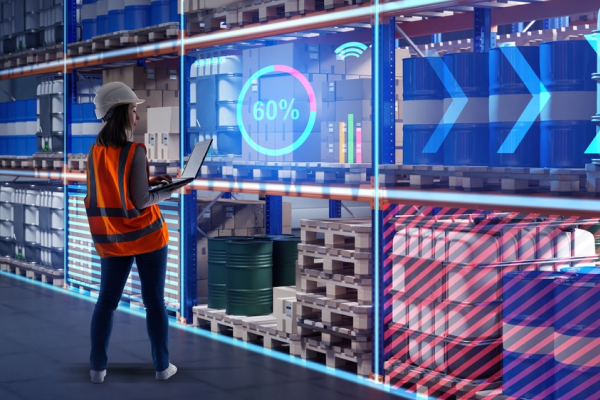
A smart warehouse is an inventory management ecosystem that leverages cutting-edge digital tech to automate and optimize daily operations. From receiving goods and storing inventory to picking, packing, and dispatching orders, every step becomes significantly faster and more accurate.
Unlike traditional facilities relying heavily on manual labor, a smart warehouse connects various devices, sensors, software, and machinery into one cohesive, integrated ecosystem. This powerful tech synergy allows the facility to operate with remarkable intelligence.
Interestingly, this concept doesn't always require massive investments in expensive robots. Many businesses kick off their digital transformation by implementing an integrated inventory management system before scaling up to more complex automation.
Why Is a Smart Warehouse Important?
Many business owners still view warehouses merely as storage spaces. However, a warehouse is actually a critical operational hub that dictates the smooth flow of the entire supply chain.
This reality is exactly why a smart warehouse is so vital. Beyond that, here are several compelling reasons why companies need to adopt this technology immediately:
1. Improves Inventory Accuracy
Inventory errors remain one of the most common warehouse challenges. By using IoT sensors, RFID, and barcode technology connected directly to warehouse systems, inventory data is automatically updated whenever products move. This significantly reduces manual errors and improves stock accuracy.
2. Accelerates Warehouse Operations
Automation allows receiving, storing, picking, packing, and shipping processes to be completed much faster than traditional manual methods. Some modern warehouses can even operate almost continuously throughout the day.
3. Reduces Operational Costs
Although the initial investment may seem significant, a smart warehouse helps lower long-term operating costs. Efficient workflows reduce labor requirements, minimize waste, and decrease costly operational mistakes.
4. Supports Business Growth
As businesses expand, warehouse activities become increasingly complex. A smart warehouse enables businesses to manage larger inventories and higher order volumes without creating unnecessary operational complexity.
5. Improves Customer Satisfaction
Operational improvements ultimately benefit customers. Faster deliveries, accurate inventory, and fewer shipping mistakes create a better customer experience, encouraging repeat purchases and long-term loyalty.
How Does a Smart Warehouse Work?
So, how does a smart warehouse management system actually function? Within this ecosystem, every process connects through a data network that exchanges information in real time.
The presence of IoT and 5G ensures this data exchange remains lightning-fast and incredibly stable. Here is a clearer look at the workflow:
1. Automated Inbound Recording
When products arrive, barcode or RFID scanners immediately identify each item. Product information is automatically recorded in the warehouse system without manual data entry, making receiving faster and more accurate.
2. Smart Storage Allocation
After registration, warehouse software analyzes each product's characteristics and recommends the most efficient storage location. In advanced facilities, robots or automated guided vehicles (AGVs) transport products directly to their assigned locations.
3. Real-Time Inventory Monitoring
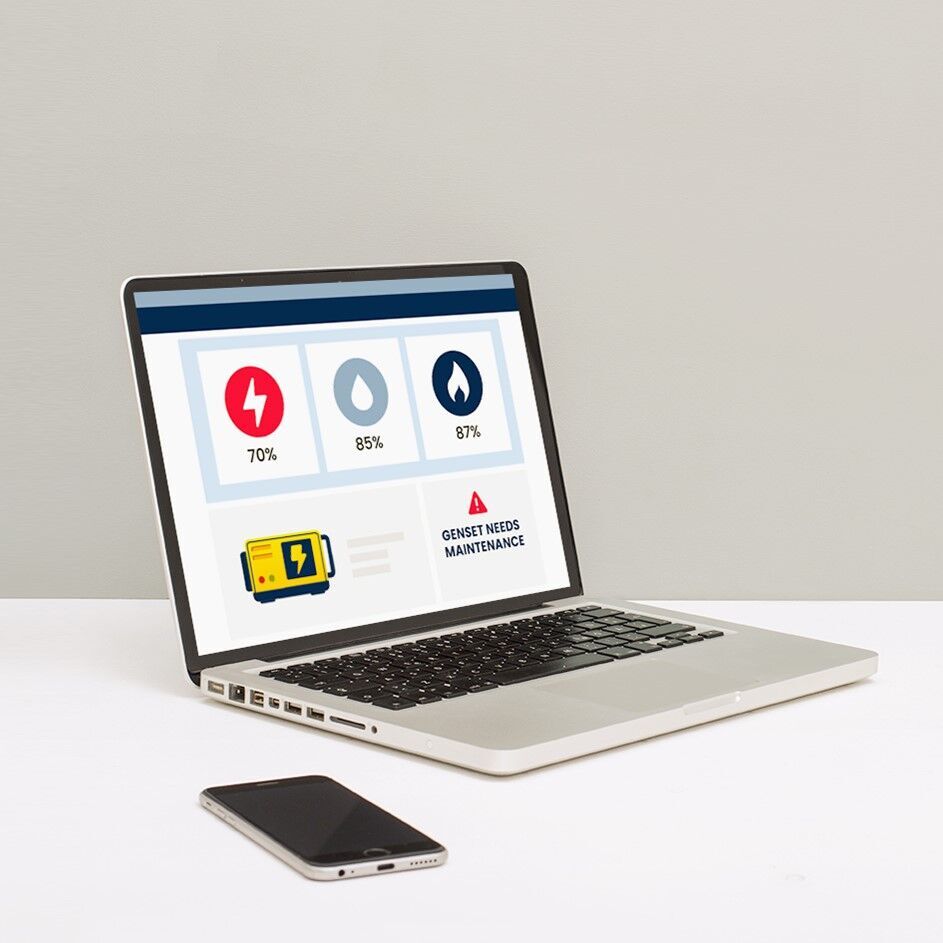
IoT sensors continuously monitor inventory levels, product locations, warehouse temperature, humidity, and equipment conditions. If abnormal conditions occur, the system automatically sends alerts so staff can respond immediately.
4. Efficient Order Picking
Once an order is received, the warehouse system calculates the fastest picking route and provides instructions to warehouse staff or autonomous robots. This shortens picking time while improving order accuracy.
5. Packing and Shipping
After products are picked, packing can be completed through semi-automated or fully automated processes. Shipping information is then connected directly to distribution systems, allowing deliveries to be scheduled much faster.
6. Data Analytics for System Optimization
Every warehouse activity generates valuable operational data. Businesses can analyze this information to identify best-selling products, forecast inventory demand, optimize warehouse layouts, and discover additional opportunities to improve efficiency.
Benefits of Implementing a Smart Warehouse for Business
The impact of adopting this technology might not be obvious overnight. However, over the long haul, the advantages become undeniably clear.
1. Better Inventory Accuracy
Inventory mistakes become much less common because IoT sensors, RFID, barcode technology, and a smart warehouse management system automatically record every inventory movement. This creates reliable inventory data that supports better business decisions.
2. Faster Warehouse Operations
Automation accelerates product searching, order picking, packing, and shipping. Instead of manually locating products, employees receive immediate guidance on product locations and the most efficient routes.
3. Fewer Human Errors
People remain an essential part of warehouse operations, but repetitive manual tasks naturally increase the chance of mistakes. Smart warehouse technologies automate many of these repetitive activities, reducing costly errors, and improving operational consistency.
4. Lower Operating Costs
While implementation requires upfront investment, businesses often reduce labor costs, minimize damaged inventory, and improve overall warehouse productivity over time. For many organizations, this makes a smart warehouse a valuable long-term investment.
5. Higher Customer Satisfaction
Customers benefit from faster order fulfillment, accurate deliveries, and improved product availability. These improvements strengthen customer trust and increase the likelihood of repeat business.
Technologies in a Smart Warehouse
What exactly gives a smart warehouse its remarkable efficiency? The answer lies in a synergistic blend of interconnected technologies. Here are the core tech components:
1. Internet of Things (IoT)
IoT serves as the foundation of every smart warehouse. Connected sensors, devices, and machines continuously collect and exchange operational data.
With IoT, businesses can monitor inventory locations, storage conditions, equipment performance, and warehouse environments in real time without conducting manual inspections.
2. 5G Connectivity
IoT demands rapid, stable connectivity, which is where 5G shines. High-speed data transfer and ultra-low latency allow thousands of devices to connect simultaneously without lagging. Simply put, 5G acts as the central nervous system for data flow.
3. RFID and Barcode Systems
RFID and barcode technologies simplify inventory identification and product tracking. Unlike traditional barcode scanning, RFID can detect multiple tagged products simultaneously without requiring individual scans, significantly speeding up inventory management.
4. Artificial Intelligence (AI)
AI processes massive data volumes to predict market demand, optimize warehouse layouts, and recommend highly efficient restocking strategies.
5. Robotics and Automated Guided Vehicles (AGVs)
Warehouse robots and AGVs transport products throughout the facility automatically. Besides increasing productivity, robotic systems reduce workplace injuries by handling repetitive movements and heavy lifting tasks.
6. Smart Warehouse Management System
All technologies are controlled through a centralized system called a smart warehouse management system. This system acts as the brain of warehouse operations and provides real-time dashboards for monitoring and control.
Challenges in Implementing Smart Warehouse
Despite its advantages, implementing a smart warehouse also comes with challenges.
1. High Initial Investment
Deploying IoT devices, sensors, warehouse software, network infrastructure, and robotics requires considerable capital. For smaller or growing businesses, this investment can be challenging during the early stages.
2. System Integration Challenges
Many companies still rely on conventional warehouse management systems that have supported operations for years.
Connecting modern technologies with legacy systems often requires additional time, technical expertise, and careful planning to avoid disrupting daily operations.
3. Workforce Readiness
Employees need proper training to adapt to new systems. Human involvement remains important even in automated environments.
4. Data Security Risks
As more warehouse devices become connected, cybersecurity risks also increase. Businesses must implement strong security measures to protect operational data, connected devices, and digital infrastructure from potential cyber threats.
Improve Warehouse Efficiency with an Integrated Smart Warehouse Solution
Building a smart warehouse is about much more than introducing advanced technology. The real goal is to create accurate data, improve decision-making, and help businesses operate more efficiently every day.
To support these needs, Telkomsel Enterprise's Smart Manufacturing Smart Warehouse solution helps businesses modernize warehouse operations through an integrated digital platform. With real-time inventory monitoring, accurate asset tracking, and centralized operational data, companies gain complete visibility across their warehouse activities.
Having fast access to reliable information allows businesses to optimize inventory management, speed up product distribution, and identify operational bottlenecks before they affect performance. Smart Manufacturing Smart Warehouse also helps reduce disruptions that can slow warehouse operations, leading to higher productivity and smoother business processes.
As speed, accuracy, and operational efficiency become increasingly important for staying competitive, investing in a smart warehouse can become a strategic step toward building a stronger, more agile, and future-ready business.
FAQ
Is smart warehouse technology only suitable for large enterprises?
Not at all. While large corporations often pioneer smart warehouse adoption, this technology is highly accessible for medium-sized businesses and even MSMEs. The transition doesn't require a massive, all-at-once investment. Companies can start small by implementing an integrated inventory management system, utilizing barcodes, or setting up real-time stock monitoring. As the business scales, advanced tech like IoT, AI, or robotics can be added progressively based on actual needs.
How long does it take to transition from a traditional warehouse to a smart warehouse?
Implementation timelines vary depending on warehouse size, operational complexity, and the technologies being deployed. Basic digitalization, such as inventory management systems and barcode integration, may take only a few weeks. More advanced projects involving IoT, robotics, automation, and legacy system integration may require several months or even more than a year. Many businesses choose a phased implementation to ensure a smooth transition without interrupting daily operations.
How do IoT sensors help prevent damage to sensitive products inside the warehouse?
IoT sensors continuously monitor environmental conditions such as temperature, humidity, vibration, and air quality inside the warehouse. This information is automatically transmitted to the monitoring system in real time. If storage conditions exceed safe limits, for example in pharmaceutical or food storage facilities, the system immediately sends alerts so warehouse teams can take corrective action before products are damaged.