




Measuring the consumption of electricity, water, or gas requires precise data, especially in industrial sectors. Manual reading processes are often susceptible to errors, leading to data inaccuracies and higher operational costs.
Fortunately, with the advancement of technology, energy consumption is now tracked using smart meters, ensuring more accurate readings. As we dive deeper into this topic, it becomes clear that the advantages of smart IoT meters extend far beyond just improved efficiency. Let’s explore these advantages in detail and understand why IoT smart meters are the future of energy management.
What Is a Smart Meter?
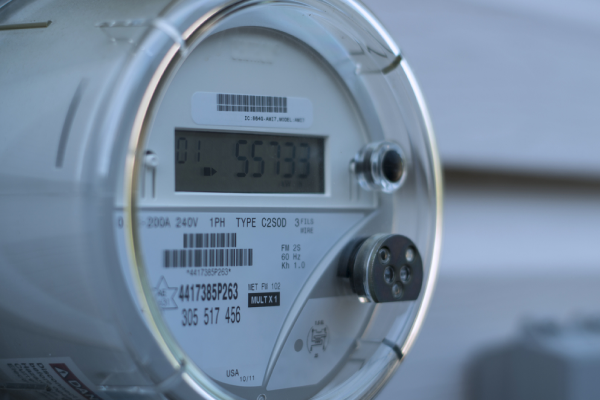
A smart meter is an intelligent version of conventional meters, designed to measure the consumption of electricity, water, or gas automatically and in real-time. What sets smart meters apart is their ability to continuously collect data and transmit it to utility service providers, providing up-to-the-minute usage information.
This automated system enhances the accuracy and efficiency of data collection compared to traditional methods.
How Does a Smart Meter Work?
On the surface, smart meters may appear simple. However, behind their sleek design lies a complex system. These devices are equipped with specialized sensors that measure energy consumption accurately and convert the data into easy-to-understand figures that can be transmitted wirelessly.
For electric smart meters, the system monitors voltage and current flowing through the network. These two data points are processed to calculate the energy used, which is then accumulated over time to provide total consumption figures.
In the case of IoT smart water meters and gas meters, sensors measure flow rate, recording volume usage using ultrasonic, turbine, or digital mechanisms. This data is automatically transmitted via a data network, enabling real-time monitoring and reporting.
Smart Meter vs. Analog Meter: The Key Differences
The gap between smart meter and traditional analog meters is substantial, not just in terms of appearance but also in functionality. Here are the key differences:
Principle of Operation
Analog meter operates on a mechanical principle, relying on electromagnetic induction. The electrical current spins on an aluminum disk, and the rotation is translated into consumption readings on a display. This system depends heavily on physical moving parts.
In contrast, smart meter utilizes a digital monitoring principle, where energy consumption is measured, processed, and transmitted as data, eliminating the need for physical components and ensuring greater precision.
Technology Integration
While analog meters are relatively basic and independent, smart meters are part of a much broader technological ecosystem. They integrate sensors, communication systems, and networks, allowing for real-time monitoring and seamless integration with energy management platforms.
Accuracy
Due to wear and tear or mechanical malfunctions, analog meters can suffer from reading inaccuracies, especially as they age. This can lead to discrepancies between actual usage and billing amounts.
On the other hand, IoT smart meters are designed for higher accuracy, collecting data at more frequent intervals, and providing precise, reliable readings for energy analysis.
Data Logging
Analog meter requires manual reading by staff, a time-consuming process prone to delays and human error. Smart IoT meter, however, automate data collection and transmission, ensuring that usage information is sent regularly and on time, making the monitoring process more practical and transparent.
Why IoT Smart Meters Are More Effective
The advantages of IoT smart meter go far beyond just their modern technology. Their operational methods transform the entire process of energy management, offering a new level of efficiency.
While traditional meters rely on manual readings, smart meter automatically send usage data to central systems at regular intervals. This automatic system is stable and scalable, covering extensive areas without interruption.
Moreover, smart IoT meters provide improved accuracy by recording data digitally and in real-time, minimizing the risks of human error and delays. Additionally, they can detect unusual consumption patterns and send early warnings. This capability allows for quicker responses to leaks, malfunctions, or unexpected surges in consumption.
Challenges of Using Smart Meter
Despite the advantages, the implementation of smart meters comes with its own set of challenges. As these devices become more sophisticated and interconnected, it is essential to consider the following before widespread adoption:
1. Data Privacy and Security Risks
Since smart meters transmit usage data routinely, there is a risk of unauthorized access to sensitive information. Strong security measures must be in place to prevent data breaches.
2. Cybersecurity Threats
The connected nature of smart meters makes them vulnerable to cyber-attacks. Such disruptions could affect data accuracy or even the continuity of services.
3. High Implementation Costs
The initial investment for smart meters can be substantial, as it includes the cost of the devices, networking infrastructure, and system integration. This investment can be a barrier for some users.
4. User Acceptance
Some users may be hesitant to adopt IoT smart meter due to concerns about privacy, security, or simply a lack of understanding of the technology. Proper education is essential to facilitate smoother adoption.
5. System Integration and Standardization
For smart meter data to be effective, it needs to be integrated with other systems. Without clear standards, the integration process can become cumbersome and inefficient.
Solutions to Overcome Smart Meter Challenges with Telkomsel Enterprise
Despite the numerous benefits of IoT smart meters, there are challenges that must be addressed. This is to be expected, as smart meters operate digitally and require reliable connectivity at all times. To meet these needs, NB-IoT Smart Meter from Telkomsel Enterprise offers the perfect, trustworthy solution.
Backed by LTE-standard data security, a wide network coverage that reaches areas with limited signal, and highly efficient power consumption, NB-IoT Smart Meter by Telkomsel Enterprise ensures that the operation of smart meters remains optimal. Additionally, with a battery life of up to 10 years, the solution significantly reduces maintenance costs, offering peace of mind and added value for your business.