



Cloud computing has evolved from a mere technological trend into a cornerstone component that determines the competitiveness of a business. However, maximizing the potential of the cloud requires more than just simple adoption. This is where understanding IaaS, PaaS, and SaaS becomes critically important, especially for decision-makers within companies.
These three services are presented as solutions that specifically address different business needs. So, which solution is the best fit for your business? Before answering that question, let's begin by understanding IaaS, PaaS, and SaaS in depth.
What Are IaaS, PaaS, and SaaS?
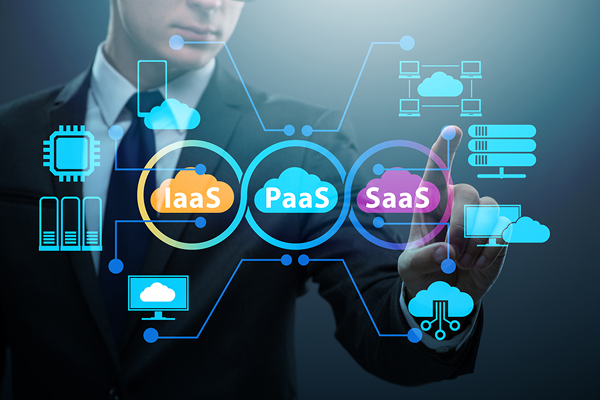
Basically, IaaS, PaaS, and SaaS are service models within the cloud computing ecosystem. But before diving deeper, what exactly is cloud computing?
Cloud computing itself is a technology that allows you to access computing resources via the internet without having to own physical hardware yourself. Simply put, this technology is here to make technology management more efficient and flexible.
Now, let's move on to IaaS, PaaS, and SaaS. To make it easier to understand, here is a brief overview of all three, including common IaaS, PaaS, and SaaS:
1. IaaS (Infrastructure as a Service)
IaaS is a service that provides basic IT infrastructure such as virtual servers, data storage, and networking via the internet. With this solution, you do not need to purchase physical hardware, because everything is provided by the service provider.
Even though the infrastructure is not entirely yours, control remains in your hands. You can choose the operating system, install applications, and configure settings according to your needs. Some prominent examples of IaaS, PaaS, and SaaS in the IaaS category include Amazon Web Services (EC2), Microsoft Azure (Virtual Machines), and Google Cloud (Compute Engine).
2. PaaS (Platform as a Service)
If IaaS gives you infrastructure that is still completely empty, then PaaS gives you infrastructure that is already equipped with basic facilities.
PaaS provides a complete platform to develop, test, and run applications. Infrastructure such as servers, operating systems, and databases are managed by the provider. You just focus on creating the application.
Some examples of PaaS include Heroku, Google Cloud (App Engine), and Amazon Web Services (Elastic Beanstalk). This model is very helpful for developer teams. They no longer need to worry about managing servers or manual scaling. Everything is prepared to make the development process faster.
3. SaaS (Software as a Service)
SaaS is the most user-friendly and practical model among the three. It delivers fully functional applications over the internet.
In this service model, you simply subscribe, log in, and start using the service immediately. You do not need installation, and you do not need manual updates anymore. All of that is managed by the provider.
Some examples of SaaS that you may even already use include Google Workspace, Salesforce, and Dropbox. Usually, this SaaS service model is used for needs such as corporate email, customer management (CRM), or team collaboration.
Why Are IaaS, PaaS, and SaaS Important?
Now the question is, why do you need to care about the differences between iaas paas and saas?
Each model has strategic consequences. If your business needs full control, high-level security, and specific configuration, IaaS provides the room for that. If you want to accelerate application development without the hassle of infrastructure issues, PaaS can be the middle ground. Meanwhile, if you just want to use software directly for daily operations, SaaS is clearly the most practical.
Cloud computing allows companies to no longer be burdened by hardware investments upfront. You can start small, then scale up according to business needs. Payment models are generally also flexible and often based on usage or subscription.
Characteristics of IaaS, PaaS, and SaaS
As previously mentioned, the IaaS, PaaS, and SaaS service models are designed to meet specific needs. Therefore, all three have several inherent characteristics, such as:
1. IaaS
If you choose IaaS, it means you want to hold major control over the infrastructure. This service provides virtual servers, storage, and networking, but management of the operating system to applications remains your responsibility.
The strongest characteristic of IaaS is its flexibility. Capacity can be increased or decreased according to needs. When traffic spikes, you just add resources. When it needs to decrease, capacity can be reduced to be more cost-effective.
The payment model is also usually usage-based. You only pay according to the resources used.
2. PaaS
Unlike IaaS, PaaS comes to simplify the application development process. The infrastructure is taken care of by the service provider. So, you no longer need to think about things like servers, patches, or network configurations.
The main characteristic of PaaS lies in its efficiency. This platform is usually already equipped with an operating system, database, middleware, and various development tools. Because of that, the team can immediately focus on coding, testing, and deployment.
Its scalability is often automatic as well. When the workload increases, the system will adjust without manual intervention. This is the reason PaaS is often chosen by companies that want to accelerate digital innovation.
3. SaaS
SaaS is the simplest model from the user's side. The application is ready. Here, you just log in and start using it immediately.
The characteristics of this SaaS are very clear, namely no installation needed, no manual updates, and no need to manage infrastructure. All maintenance is done by the service provider. This model is usually based on monthly or yearly subscriptions with costs that are relatively easy to predict.
SaaS is often used for operational needs that are general in nature. For example, corporate email, team collaboration, or CRM systems.
Differences Between IaaS, PaaS, and SaaS
From the characteristics of IaaS, PaaS, and SaaS, there is a clear pattern visible. However, to understand all three better, here are the differences between IaaS, PaaS, and SaaS:
1. Service Focus
IaaS focuses on providing basic infrastructure such as servers, storage, and networking. In this service model, you get the foundation. From here, you are free to build systems on top of it.
On the other hand, PaaS focuses on providing a platform for developing applications. Here, not only is the infrastructure available. Inside, there is also an operating system and all the facilities needed to develop a product.
If IaaS is infrastructure and PaaS is a development platform, then SaaS focuses more on providing ready-to-use software. Here, you don't need to build or develop anything.
2. Management Responsibility
This is where the IaaS vs PaaS vs SaaS distinction feels most real. In IaaS, you are responsible for managing the operating system, applications, to security configurations. The provider only handles the physical infrastructure and its virtualization.
In PaaS, your responsibility is lighter. You only need to manage applications and data. Servers and operating systems are managed by the cloud computing service provider.
Meanwhile, in SaaS, almost everything is handled by the service provider. You only need to use the application. The further towards IaaS, the greater your responsibility. Conversely, the further towards SaaS, the more practical the usage.
3. Flexibility and Control
If your company needs full control and lots of adjustments, IaaS offers the highest flexibility. You are free to determine the system architecture according to needs.
Below that, there is PaaS which provides a moderate level of flexibility. You can develop applications according to your needs here. However, you cannot configure the infrastructure freely.
Of all cloud computing service models, SaaS is the model with the most limited flexibility. Customization options available are limited to the features provided. Nevertheless, its implementation is also the fastest.
4. Pricing Models
IaaS generally uses a pay-as-you-go model. You pay based on resources used such as CPU, RAM, or storage.
On the other hand, PaaS usually has a more packaged cost structure. The calculation is adjusted to the number of users or application capacity.
Whereas in SaaS, the calculation model is almost always based on monthly or yearly subscriptions. Generally, the calculation is done per user or per several users.
When Should Businesses Use IaaS, PaaS, or SaaS?
After understanding the examples of IaaS PaaS and SaaS, the next step is choosing the right model for your business.
1. Choose SaaS for Speed and Simplicity
If your company wants to use applications immediately without the hassle of managing servers or system updates, SaaS is the most logical choice. This model is suitable for general operations such as corporate email, customer management, team collaboration, or HR systems.
The advantage of this service model is very clear. Your team can focus on business development, not managing technical matters. However, there is one note. If your needs are very specific and require lots of customization, SaaS might feel limited.
2. Choose IaaS for Full Control
IaaS is appropriate to use when a company needs full control over IT infrastructure. For example, you want to build a system with special configurations, or have high-level security needs.
This model is also suitable for companies that are growing and need flexible scalability. So, server capacity can be increased or decreased according to needs.
If considering the characteristics of IaaS, this service model can be the right choice for companies that want to seriously build a long-term digital foundation. In some ways, IaaS is indeed more complex. However, this is still commensurate with the flexibility obtained.
3. Choose PaaS for Product Innovation
What if you have a developer team that wants to focus on making applications without being bothered by server management?
Here, PaaS could be the most appropriate answer. This service model allows your team to concentrate on development, testing, and application deployment. Meanwhile, regarding infrastructure, all of that is handled by the provider.
PaaS is very suitable for technology companies, digital startups, or businesses that are building web and mobile applications. Because there is no need to think about infrastructure, development time can be shorter. Team collaboration is also easier. However, because the infrastructure is not entirely under your control, the flexibility is indeed not as high as IaaS.
Choose the Right Digital Foundation for Growth
After understanding the differences between between IaaS, PaaS, and SaaS based on their functions, which model is most appropriate for your business?
Every company has different needs. However, if your business needs a strong, stable infrastructure foundation that can be customized according to needs, then IaaS is a choice worth considering. In this case, IaaS from Telkomsel Enterprise become the best solution.
IaaS from Telkomsel Enterprise is supported by Intercoverage Mobile Services that accommodate diverse coverage needs, so operations remain smooth in various locations. There is also a Repeater Service to strengthen signals and improve the quality of internal company communication. This is important, especially for businesses that rely on connectivity as the backbone of their activities.
In addition, there is also a Deployment Guarantee, a solution designed to increase efficiency and support your business operations. Plus, with Advanced QoS Features, you can get priority access according to IaaS location.
Contact Telkomsel Enterprise to find out further how IaaS services can help your business needs.