




Every business activity generates valuable information that can improve operational efficiency, understand customer behavior, and support better business strategies. A data warehouse helps companies store and manage data in a centralized, structured system, making analysis easier and decision-making faster.
As data from multiple sources continues to grow, managing it becomes more challenging. Without an integrated system, important insights can be scattered across different platforms, making analysis less effective. That’s why businesses need a solution that can consolidate and organize data efficiently, ensuring reliable information is always available when needed.
What Is a Data Warehouse?
If you are wondering what is a data warehouse, the answer is simple, data warehouse is a centralized data storage system specifically designed to collect, integrate, and store information from various sources into a single, unified location. Simply put, your company can access well-organized information, which significantly simplifies the business analysis process.
Unlike operational databases that handle daily transactions, this system focuses on storing historical records that are perfect for deep analysis and comprehensive reporting. The stored information comes from diverse systems, including sales applications, finance, inventory, customer service, and other digital platforms.
Why Is a Data Warehouse Important?
Managing information from multiple systems separately can be time-consuming and inefficient. A data warehouse eliminates this challenge by integrating business data into a single platform that is ready for analysis whenever needed.
Here are several reasons why a data warehouse plays a critical role in modern business operations.
1. Improves Decision-Making Efficiency
Business decisions are only as good as the data behind them. A data warehouse provides quick access to accurate and consistent information, allowing executives and managers to make informed decisions faster. This is one of the biggest benefits of data warehouses for decision making, as organizations no longer rely on fragmented or outdated reports.
2. Supports Advanced Analytics and Reporting
This system is explicitly built to support large-scale analytical needs. As a result, business teams can generate comprehensive reports, monitor company performance, and identify emerging trends that serve as the foundation for strategic planning.
3. Enables Data Mining and Machine Learning
A data warehouse provides the high-quality historical data required for technologies such as data mining, machine learning, forecasting, and predictive modeling. These technologies help organizations identify patterns, predict customer behavior, and improve future business strategies.
4. Stores Long-Term Historical Data
One of the greatest strengths of a data warehouse is its ability to retain historical information over many years. Companies can compare business performance across different time periods, evaluate previous strategies, identify seasonal trends, and forecast future opportunities using reliable historical records.
Benefits of Data Warehouse for Business
Beyond centralized data management, implementing a data warehouse provides numerous advantages that directly impact business growth and operational performance.
Better Data Quality
The integration and validation processes help reduce duplication, errors, and information inconsistencies. As a result, your company holds much more accurate and highly reliable facts.
Greater Operational Efficiency
With centralized storage, employees do not need to waste time searching for details across different systems. This directly boosts overall productivity and accelerates daily workflows.
Optimize Return on Investment (ROI)
Technology investments become more valuable when supported by effective data management. A data warehouse helps businesses identify growth opportunities, reduce operational risks, improve resource allocation, and increase the effectiveness of business strategies.
Faster Access to Business Data
A data warehouse enables users to retrieve information quickly without placing additional workloads on operational systems. This capability is especially valuable for organizations that require real-time or near real-time reporting for daily business operations.
Deeper Customer and Market Insights
By combining records from multiple sources, your company will gain a much more comprehensive understanding of customer behavior, market preferences, and potential opportunities for developing new products and services.
Types of Data Warehouse
Businesses can choose different types of data warehouses depending on their operational requirements and business objectives.
1. Enterprise Data Warehouse (EDW)
An Enterprise Data Warehouse (EDW) is a centralized repository designed to support the entire organization. It provides integrated and consistent data across all departments, making it easier for teams to perform enterprise-wide analysis and reporting.
2. Operational Data Store (ODS)
An Operational Data Store integrates operational information from multiple systems more quickly than traditional data warehouses. It is commonly used for daily operational reporting and short-term business analysis.
3. Data Mart
A data mart is a specific segment designed exclusively for the needs of a particular department or function, such as marketing, finance, or human resources. Its implementation is simpler and focuses on specific user requirements.
4. Cloud Data Warehouse
A Cloud Data Warehouse stores business data on cloud infrastructure rather than on-premises servers. This approach offers excellent scalability, flexibility, and cost efficiency, making it increasingly popular among organizations that need to manage growing volumes of data without investing heavily in physical infrastructure.
Core Components of Data Warehouse Architecture
To function optimally, the data warehouse architecture consists of several crucial components:
Metadata
Metadata contains information about the stored data, including its structure, definitions, origin, and relationships. It helps users understand how data is organized within the warehouse.
Data Repository
The data repository serves as the primary storage location where integrated business data is securely stored for long-term use.
Data Access Tools
These tools allow users to perform searches, analysis, visualization, and reporting based on the information stored inside the system.
ETL (Extract, Transform, Load) Tools
ETL is a critical process that involves pulling records from various sources, transforming them to meet established standards, and loading them into the storage system.
Management and Monitoring Warehouse
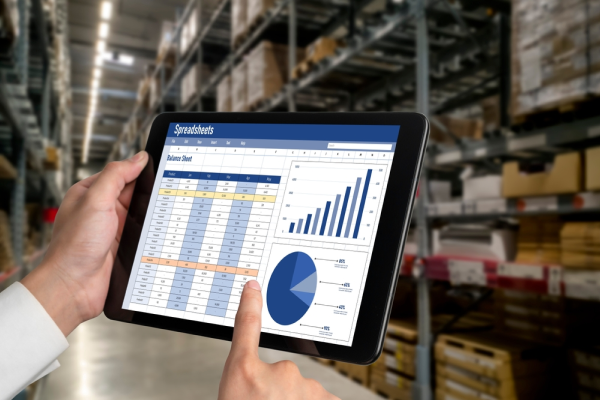
Effective data warehouse management goes beyond simply storing data. It also depends on continuously monitoring day-to-day operations to ensure the information collected remains accurate, complete, and reliable. Consistent operational monitoring helps businesses reduce the risk of asset loss, improve inventory accuracy, and make faster, data-driven decisions with greater confidence.
To support these goals, Telkomsel Enterprise's Smart Manufacturing Smart Warehouse solution provides real-time inventory monitoring and asset tracking, helping businesses generate accurate operational data. With reliable data flowing into your data warehouse, organizations can improve data quality, streamline analytics, and maximize the value of business intelligence initiatives.
Don't let critical business data remain scattered across multiple systems. Empower your business with Telkomsel Enterprise's Smart Manufacturing Smart Warehouse solution to optimize data warehouse management, improve operational efficiency, and drive sustainable business growth.
FAQ:
Does a small business need a data warehouse?
Yes, small-scale businesses can definitely leverage this technology if they manage records from multiple sources and require more structured analysis. Using it helps unify information, making choices faster and much more accurate.