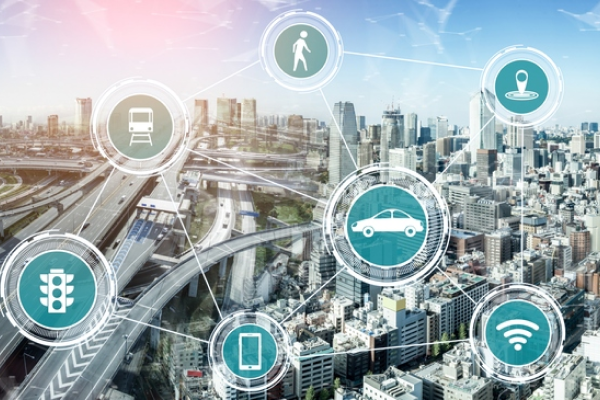






Energy waste and high operational costs remain persistent challenges in managing public street lighting for cities worldwide. Conventional streetlights that burn brightly all night, regardless of actual need, are a significant drain on municipal budgets and precious resources. This is where the smart street light emerges as a truly intelligent, adaptive, and energy-conscious solution.
An IoT based smart street light system enables efficient, large-scale monitoring and control of streetlights, transforming them from simple fixtures into dynamic nodes of a city’s infrastructure. But the advantages of a smart street light system project extend far beyond just cutting electricity bills. So, how much impact can smart street lighting truly make on energy efficiency and future urban governance?
What is a Smart Street Light?
A smart street light is an advanced public lighting system engineered to operate with greater intelligence and flexibility than its traditional counterparts. By leveraging connectivity and an array of sensors, these lights can be automatically managed, not just by a fixed schedule, but by real-time environmental conditions and activity levels on the ground.
Each smart street light is connected to a centralized control platform, enabling operators to monitor and manage thousands of lighting points in real time. From a single dashboard, lights can be switched on, turned off, dimmed, or adjusted according to the specific needs of different areas.
When a malfunction occurs, the system automatically sends detailed alerts to operators. This allows maintenance teams to respond quickly and accurately without unnecessary field inspections. In addition, most smart street light systems use long-lasting LED technology, which significantly reduces power consumption and replacement frequency.
Functions of Smart Street Light Systems
At first glance, an IoT-based smart street light system may look similar to traditional street lamps. In reality, it plays a much more strategic role in supporting road safety, urban mobility, and public comfort. Below are its core functions.
1. Improving Road Visibility and Surrounding Awareness
Smart street lights provide even and adaptive illumination for roads, vehicles, pedestrians, and nearby objects. Proper lighting helps road users better recognize surface conditions, obstacles, and movement, reducing the risk of traffic accidents.
2. Supporting Navigation for Road Users
Consistent and well-directed lighting makes navigation easier for drivers and pedestrians alike. In certain areas, brightness levels can be customized to match road types, intersections, or pedestrian zones, improving orientation and comfort.
3. Enhancing Security and Urban Aesthetics
Well-lit environments are proven to be safer and less prone to criminal activity. Beyond safety, thoughtfully designed lighting also enhances the visual appeal of public spaces, urban roads, and community areas, contributing to a more attractive cityscape.
Benefits and Advantages of Smart Street Lights
The adoption of smart street lighting transforms how cities manage energy, infrastructure, and public services. Below are the key benefits driving its growing relevance.
1. Significant Energy Savings
Smart street lights are engineered to optimize energy usage. With LED lighting and adaptive illumination, brightness levels automatically adjust to real-time conditions.
When roads are quiet, lights dim. When activity increases, illumination returns to optimal levels. This intelligent pattern dramatically reduces electricity consumption without compromising safety.
2. Reduced Operational and Maintenance Costs
Beyond electricity savings, smart street lighting significantly cuts operational expenses. The system detects faults early and sends instant notifications to the control center.
Maintenance becomes targeted and efficient, eliminating routine manual inspections. Combined with the longer lifespan of LED lamps, replacement cycles are reduced, further lowering costs.
3. Efficient Centralized Control
A smart street light system is managed through a centralized platform that operates around the clock. Operators can control thousands of lighting points remotely, making large-scale management faster, simpler, and far more efficient than manual methods.
4. Demand-Based Lighting
Every road has unique characteristics. Smart street lights allow power levels to be customized based on road type, traffic density, and activity patterns.
Lighting can also be scheduled to dim during low-activity hours, ensuring that energy is never wasted unnecessarily.
5. Improved Safety and Sense of Security
Proper illumination plays a critical role in accident prevention and public safety. Smart street lights can deliver higher brightness in high-risk areas, intersections, or pedestrian crossings, and can be integrated with sensors or cameras to create a safer urban environment.
6. Supporting Smart City Development and Sustainability
Smart street lighting is not a standalone solution. It forms a foundational component of the smart city ecosystem, contributing to reduced carbon emissions through energy efficiency.
The data generated can also support urban planning, traffic management, and sustainability initiatives, making cities more livable and future ready.
How Does an IoT Based Smart Street Light System Work?
The intelligence behind smart street lighting lies in its interconnected communication network. Each lighting point is connected within a unified system that continuously exchanges data with a central management platform.
Sensors collect information such as motion, ambient light, and operational status. This data is transmitted via IoT connectivity, enabling real-time adjustments and remote control. As a result, street lighting becomes responsive, efficient, and aligned with actual field conditions.
Save Energy Today for a More Controlled Tomorrow with Smart Street Light
At its core, the value of smart street lighting lies in intelligent energy management. Through adaptive lighting and centralized control, electricity consumption can be significantly reduced without sacrificing illumination of quality or safety.
To maximize these benefits, reliable connectivity is essential. With NB-IoT from Telkomsel Enterprise, implementing a smart street light system project becomes more efficient, scalable, and measurable.
Offering wide coverage, robust data security, cost-effective operations, and higher ROI potential, NB-IoT enables smarter, more stable, and sustainable street lighting management.
Consult with Telkomsel Enteprise to discover how NB-IoT can become the ideal foundation for implementing an efficient and future-ready smart street light system.